s

Throw back


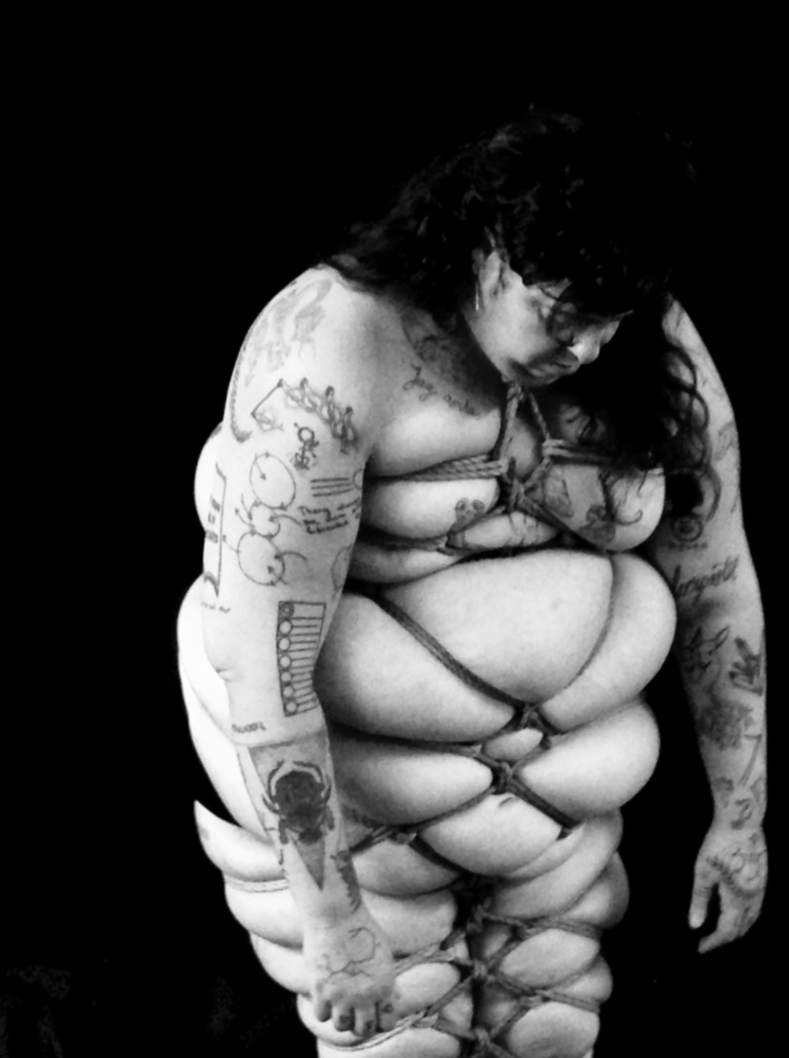
Photos from almost a decade ago which when posting I shouted: I live for that shit! ;)
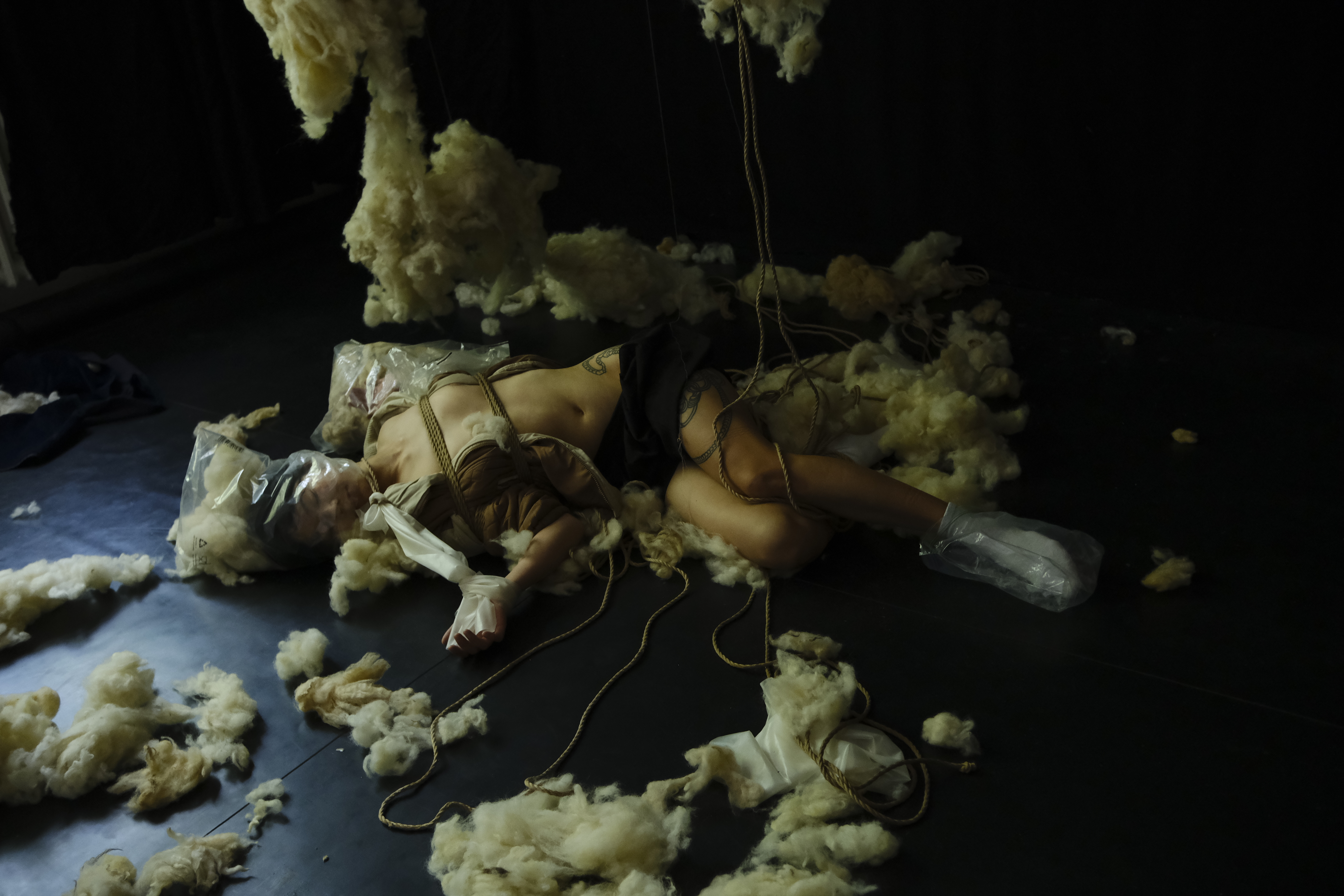
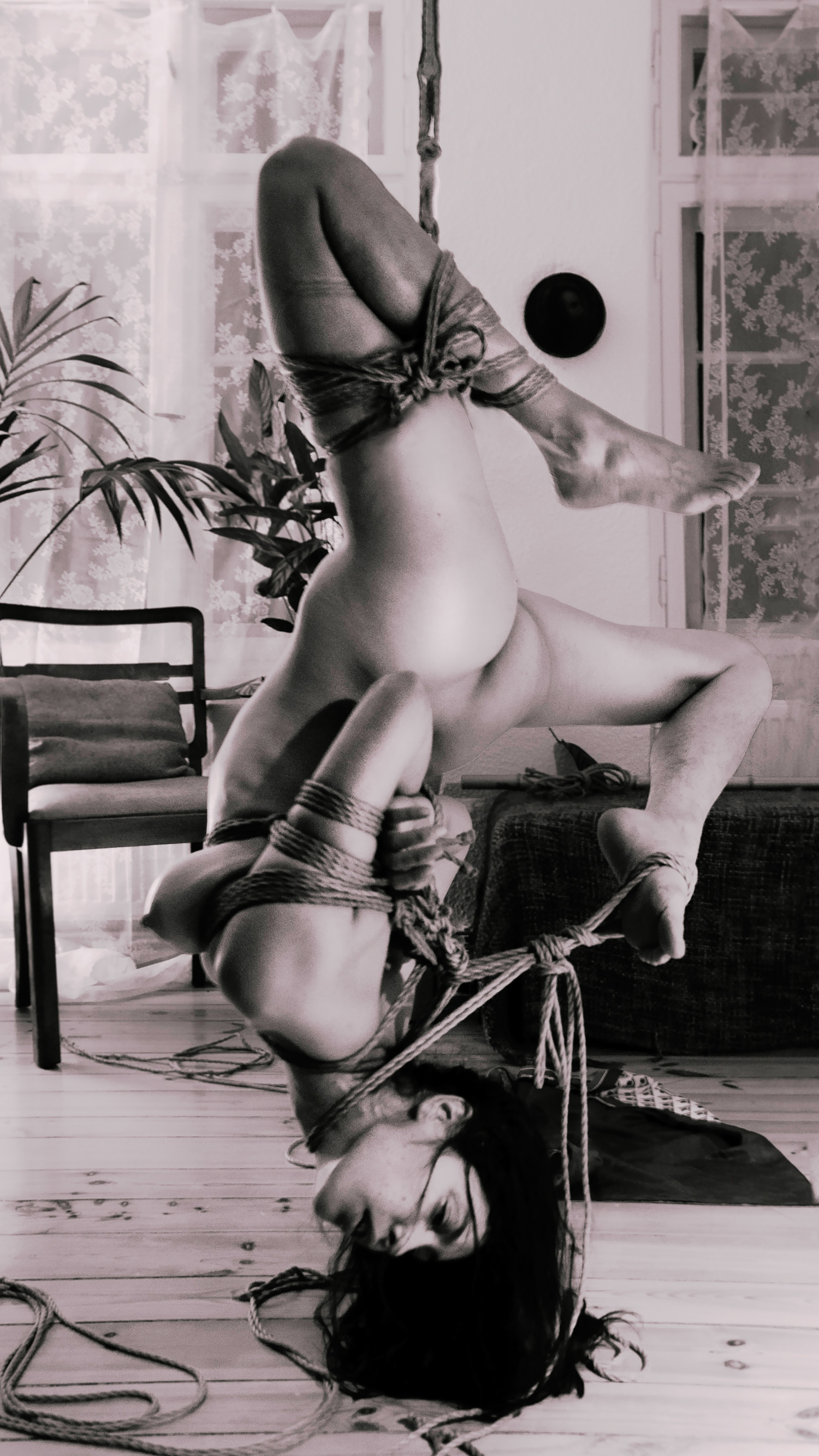
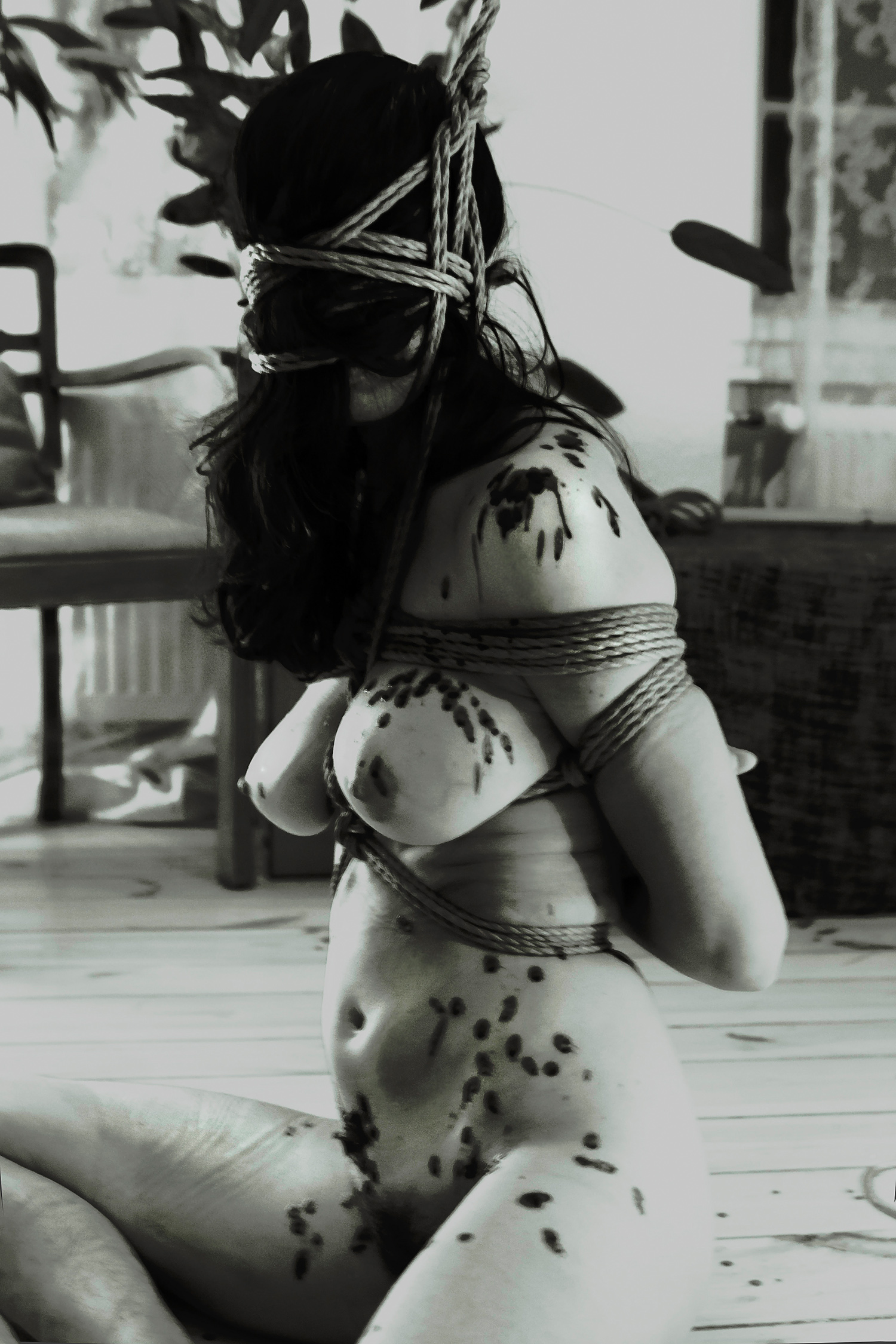
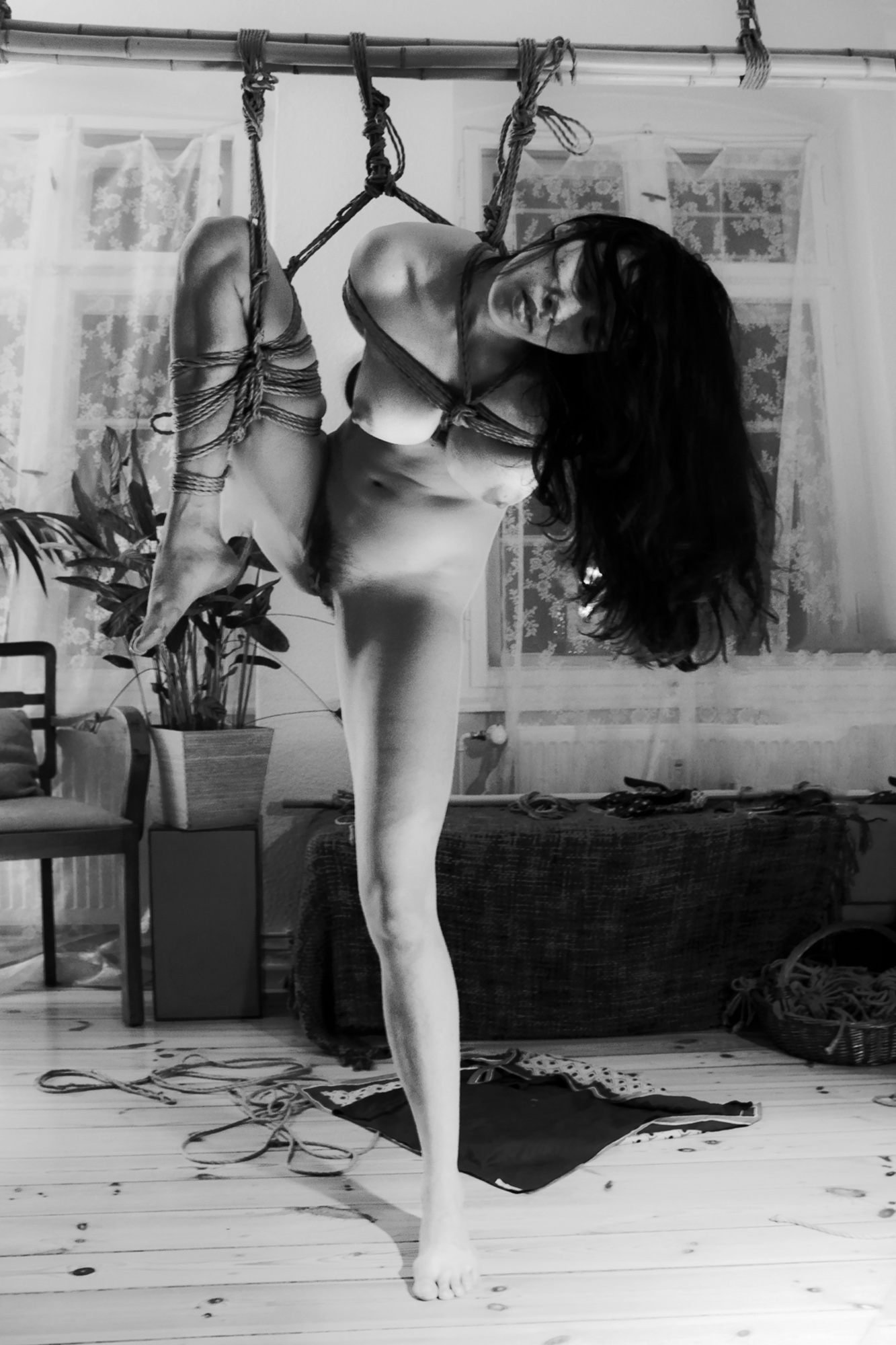
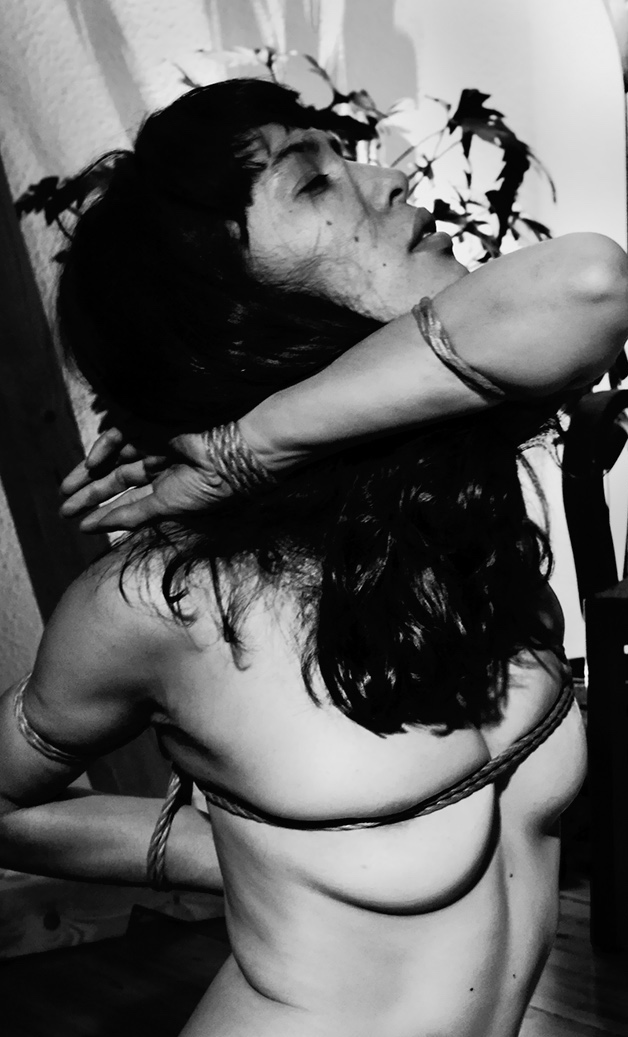
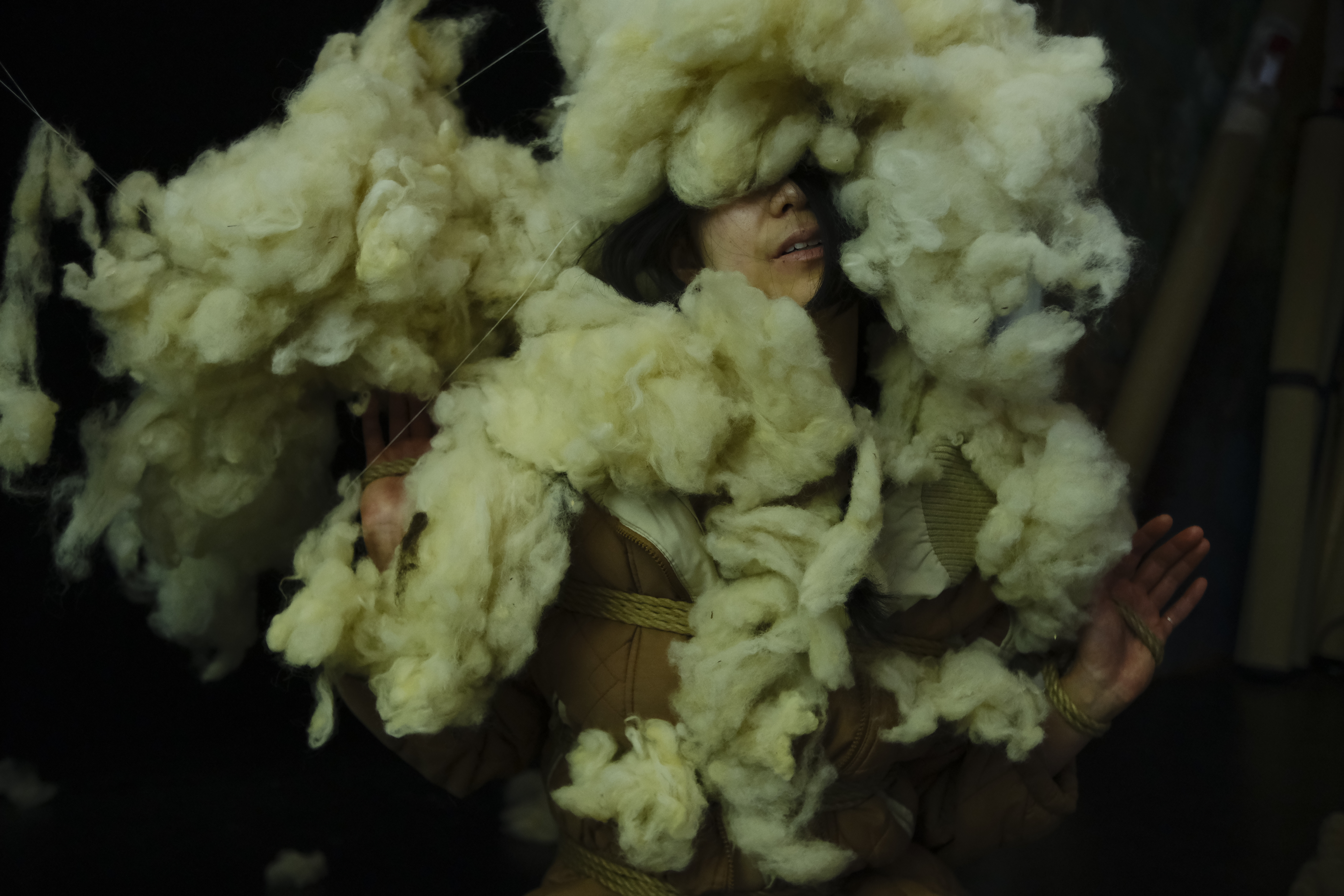
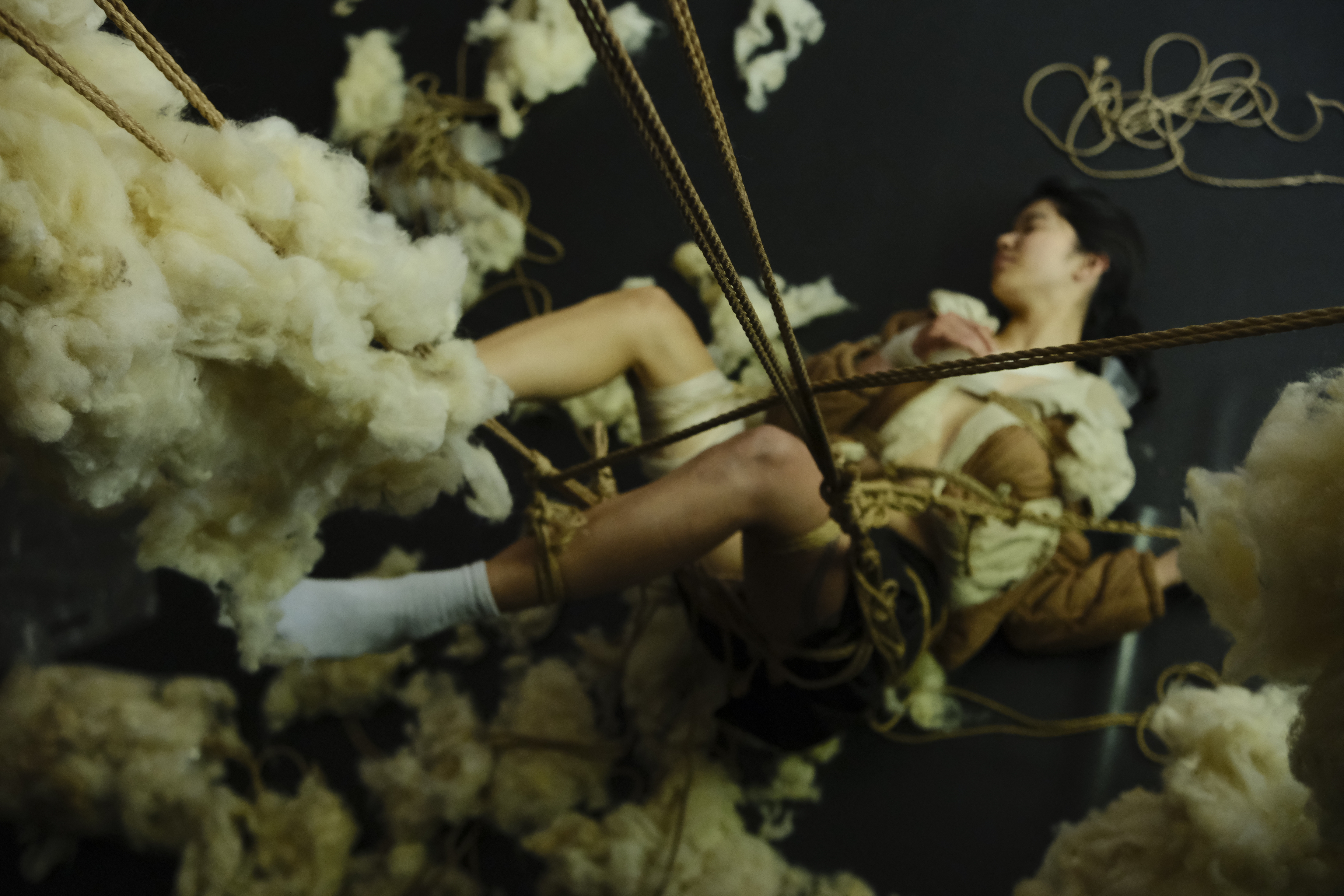
Being tied by Tamandua Kinbaku was deeply revealing. Even after years of teaching shibari myself, tying others, performing with ropes and hosting kink spaces. It was the chemistry, and his Akira Naka inspired style which clicked.
I passionately wanted to renegotiate my limits, also my border crossing drive as performer and in general. As ballet dancer I learned from early on to overstretch tendons and pain limits. For my inner punk and desire for edge it became a performative tool of resistance, which I thought needed to be reformulated with a more contemporary and fem signature. After almost 20 years, instagram compatibility, and shibari/bondage becoming so socially acceptable I often wonder about the resistant potential of it (artistically). Think people who like to enjoy ropes should just do that (if its accessible to them). For ropes on stage I guess it depends on the stories that are told, questions of constellations, and hacking ideas around ‚power play‘ and the functions of it.
The sessions with Tamandua were blissful. A rush and fine sense switching between degrees of devotion, carefully feed backing borders and teasing around them. Also a meditation and emotional empowerment it felt. Later I figured such relationships of unbounded power play dynamics in combination with shibari can be unexpectedly complex. It’s always a learning. Reflecting and positioning oneself around threshold experiences, and integrating them as performative qualities and personally takes time.
As Kinbaku photography with a deeply devoted vibe I like them.

Workshop at Zimmt: Festival for Multisensory Perception

zimmt-sense-festival-leipzig-workshop-dasniya-sommer-shibari-bondage-klasse

A sweet trip to Leipzig teaching at Zimmt Festival. Always appreciating the advance of trust of a new group. Retrospectively I think teaching bondage is fundamentally about holding a space which legitimates forms of playful and consensual rope work or bdsm dynamic. A determined time in which bodily encounters are allowed and warmly accompanied while exploring liminal desires. I am using similar tools as in movement classes, except the task unfold in an opposite way: from movement to bodily restriction. Or from shaping outer contours to internal and emotional movement.
People learn the rope techniques and a sort of scripted ritual of a bondage session. Exploring about desires, borders or thresholds and interacting beyond the verbal via rope. A material which allows extreme proximity, but equally putting a temporal space between the practitioners. For example touching indirectly to relax about the actual touch.
After 20 years of teaching, exchanging and mutual growing I still enjoy observing the mind shifting process participants go through, even in a basic introduction workshop. Thanks to ‚Zimmt‘ for this lovely invite!

Festival for Multisensorical Perception

3D Audio Concerts, Exhibitions, Workshop and Lectures

From November 25 to December 4, the sens taktil festival will focus on the overlaps and interactions between the experience of touch and the experience of hearing: in the rooms of ZiMMT and on the grounds of Kontor 80, we invite you to a joint multi-sensory, synaesthetic exploration in which the boundaries between art and the viewer become blurred. In audiovisual concerts with 3D sound or in an ASMR performance, on sound loungers or in walk-in and touchable installations of the tactile exhibition, in workshops, in the festival sauna or on the tactile path, experiences are created that can be heard and felt.

Raven with Long Covid


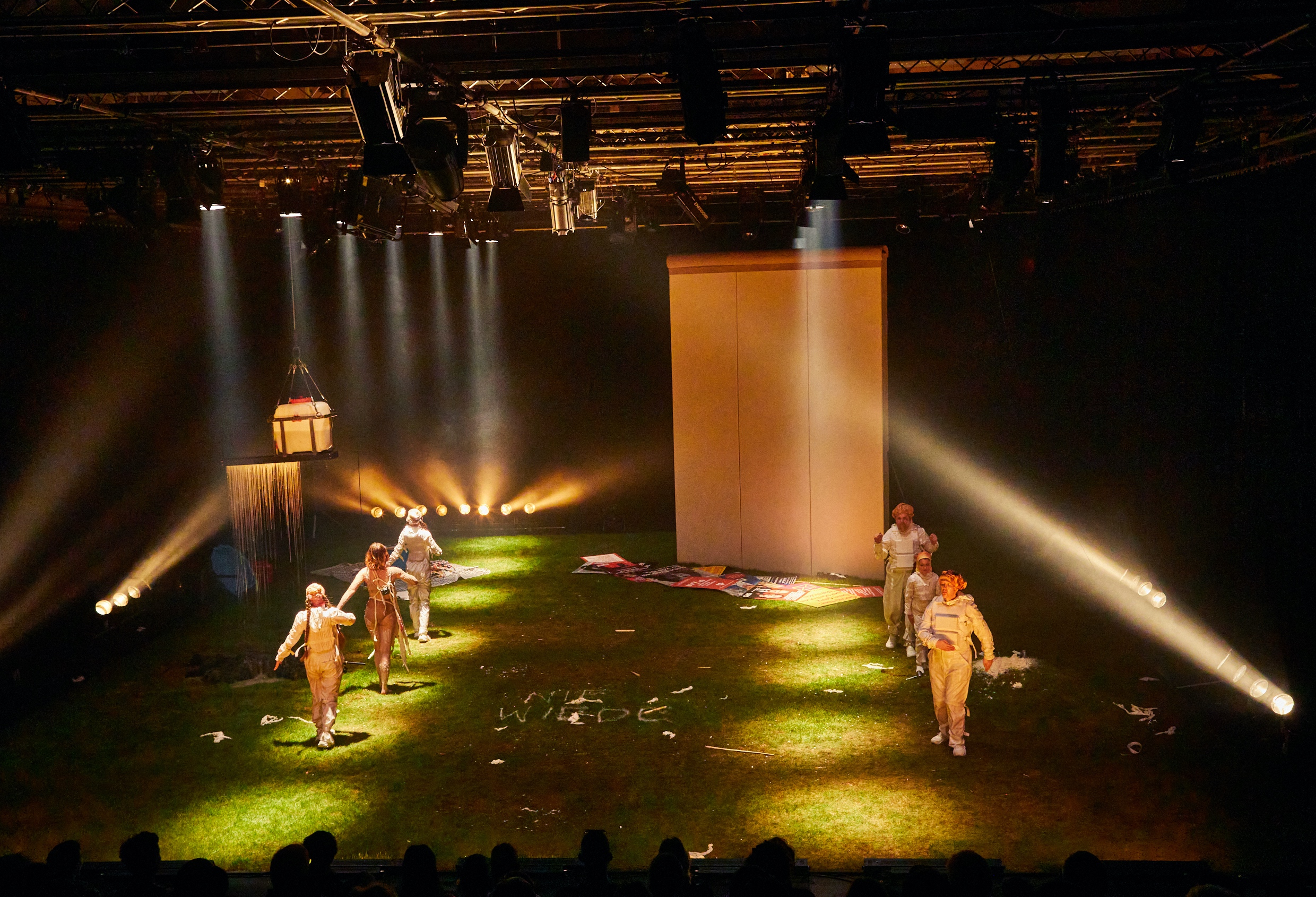
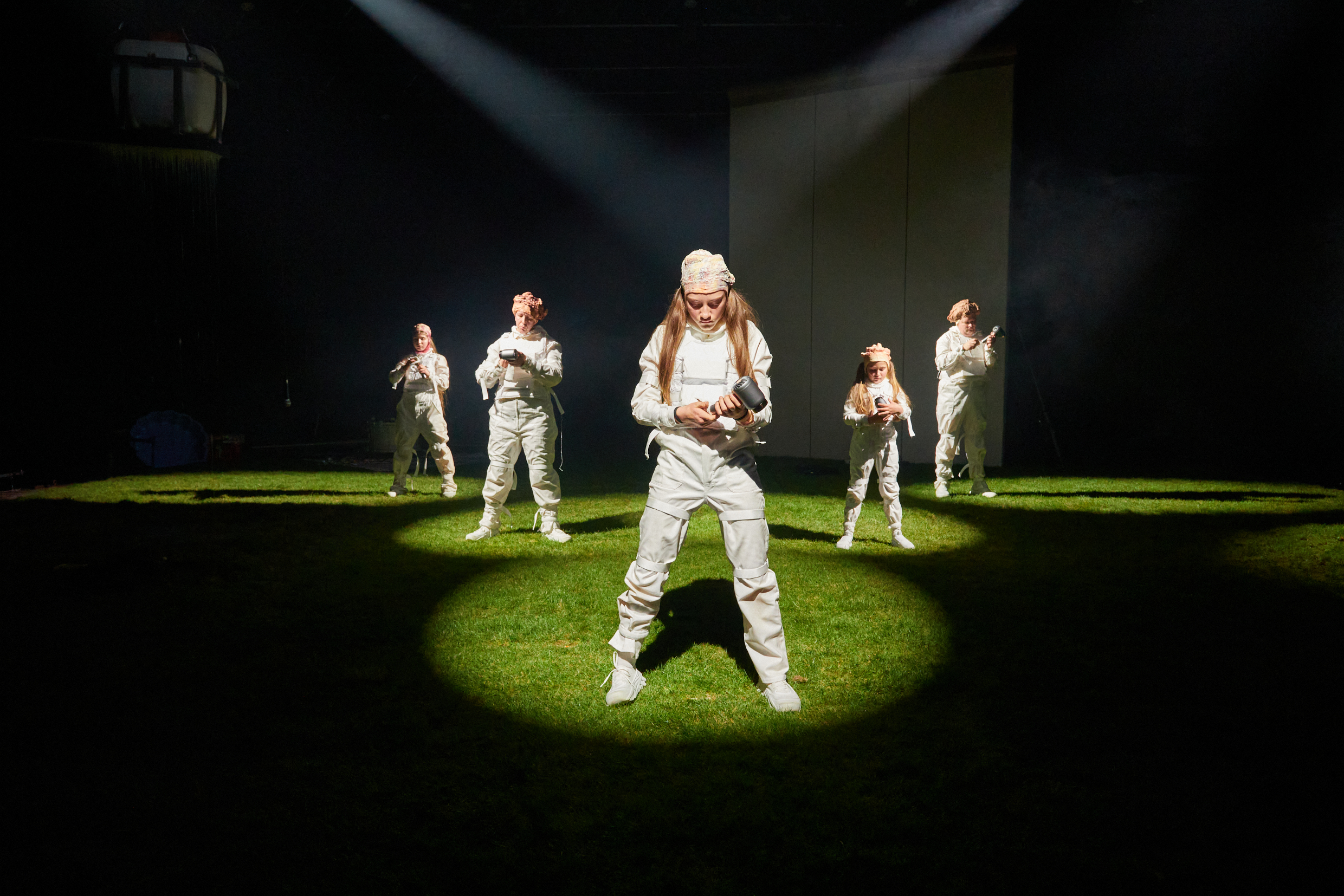
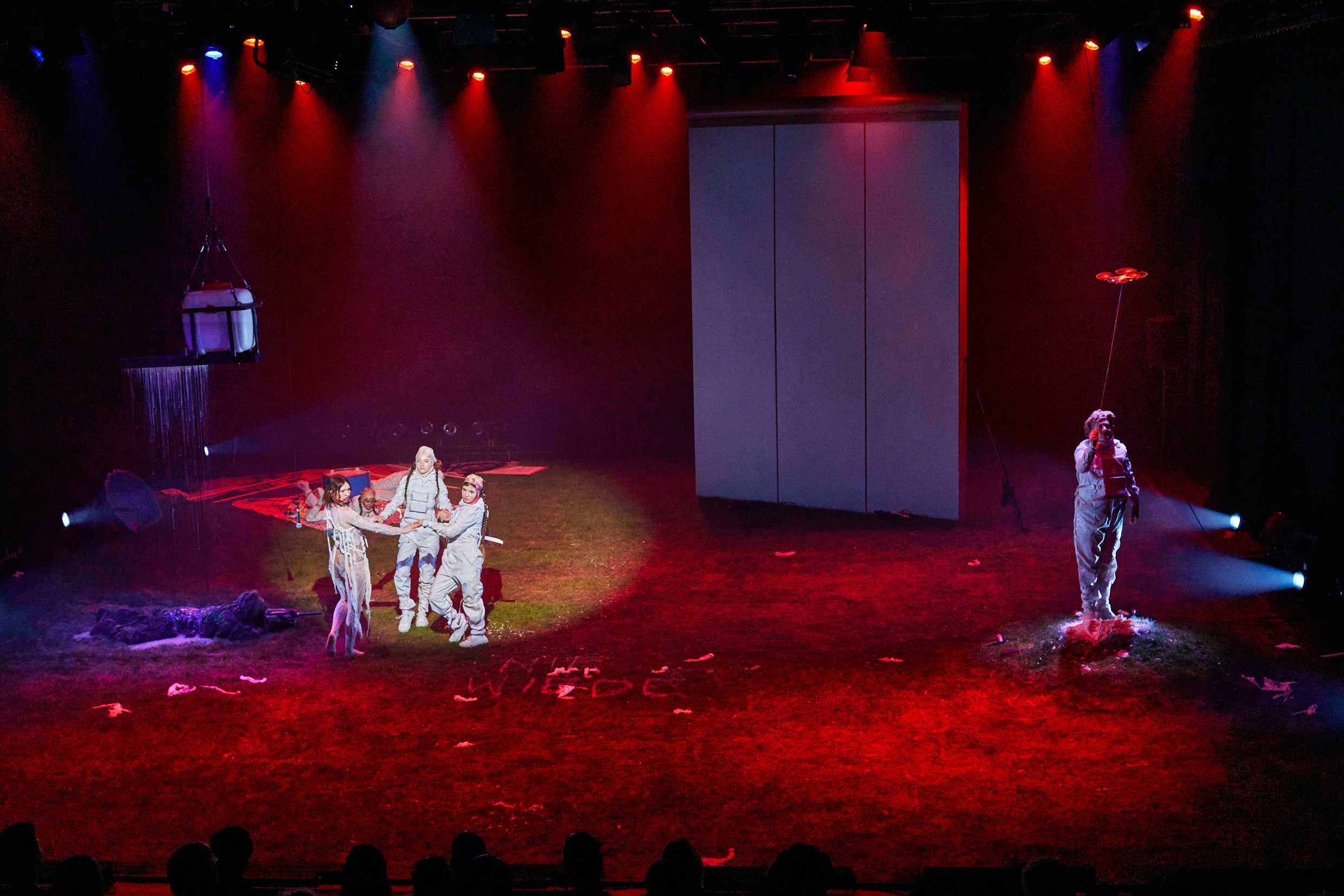
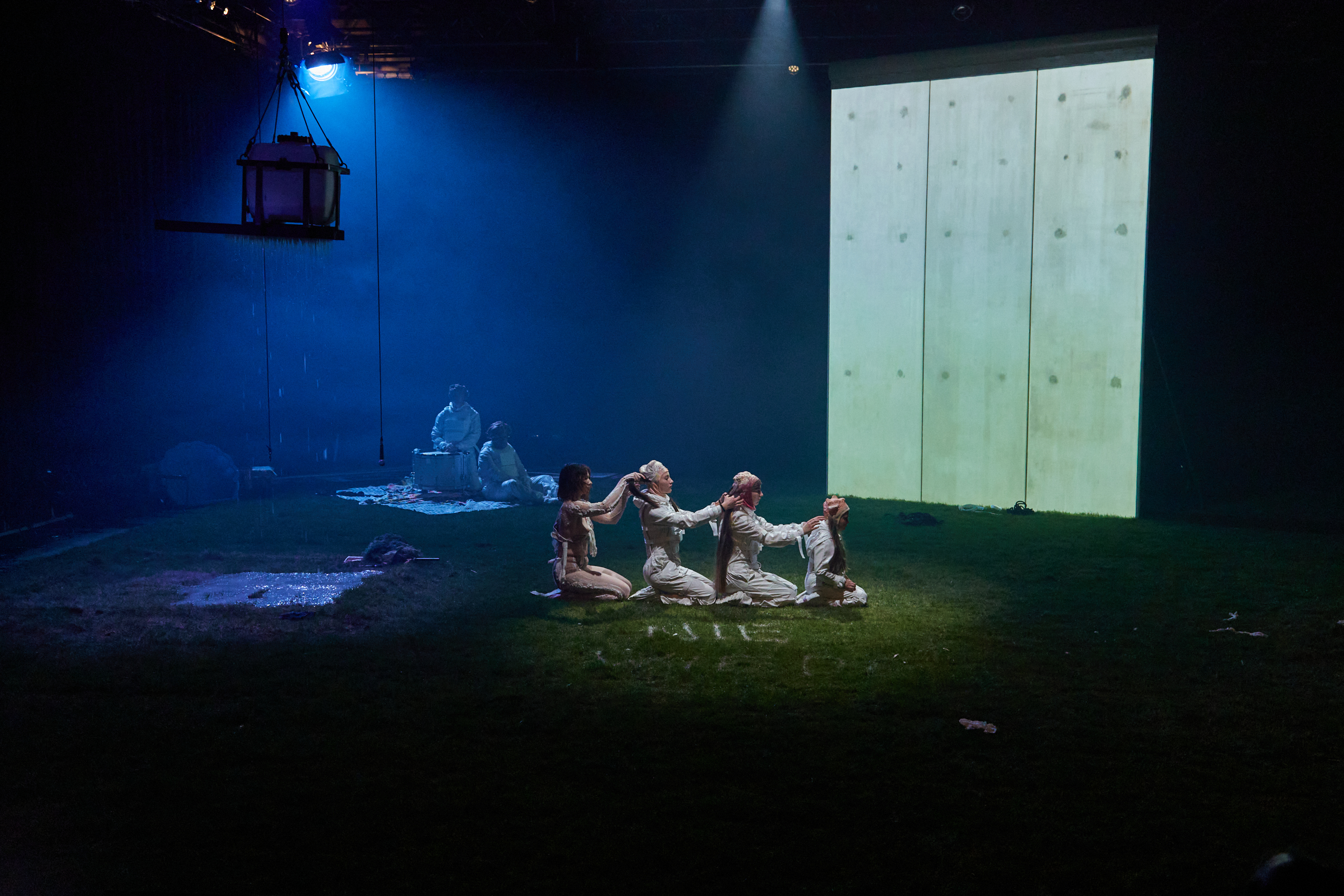
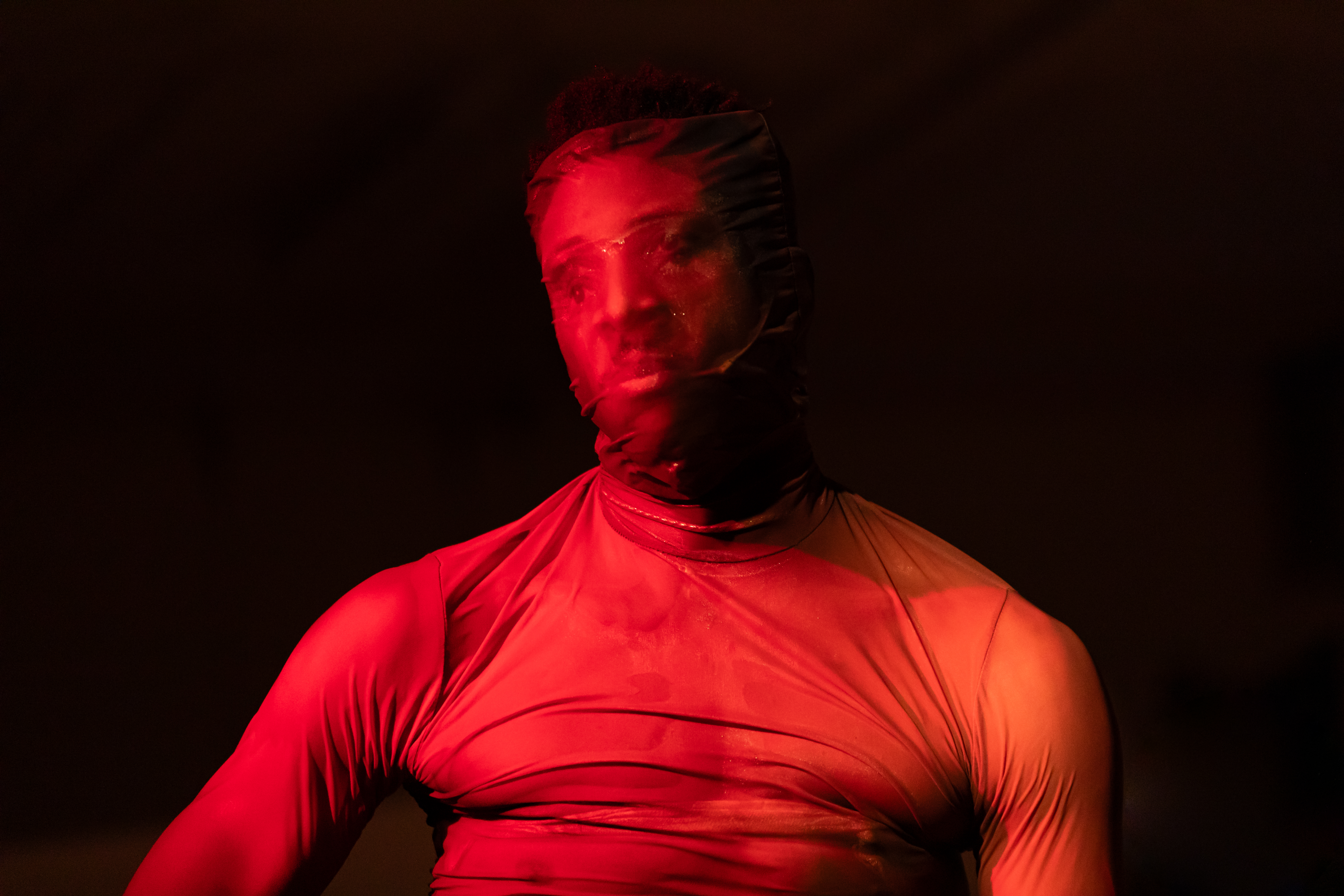
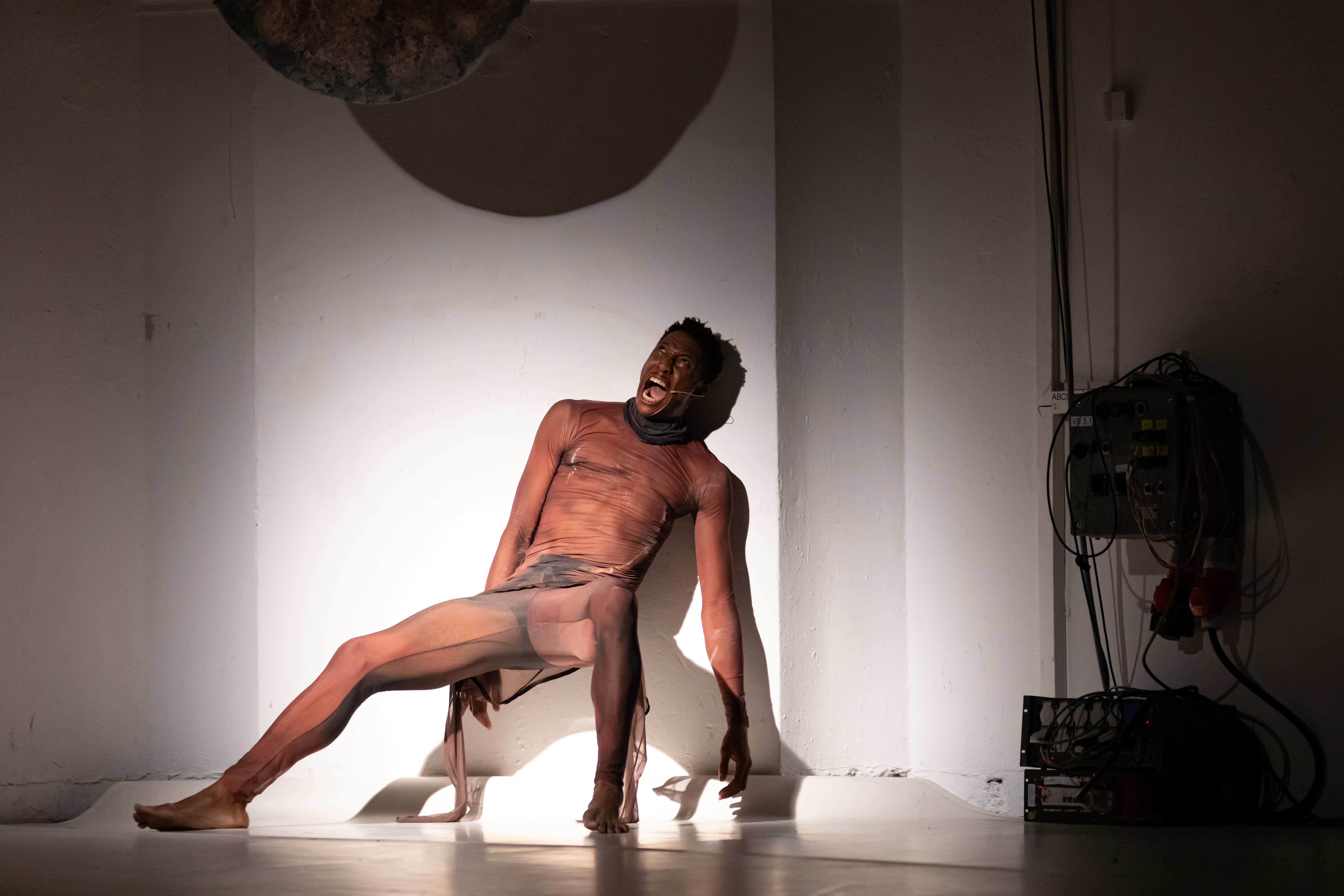
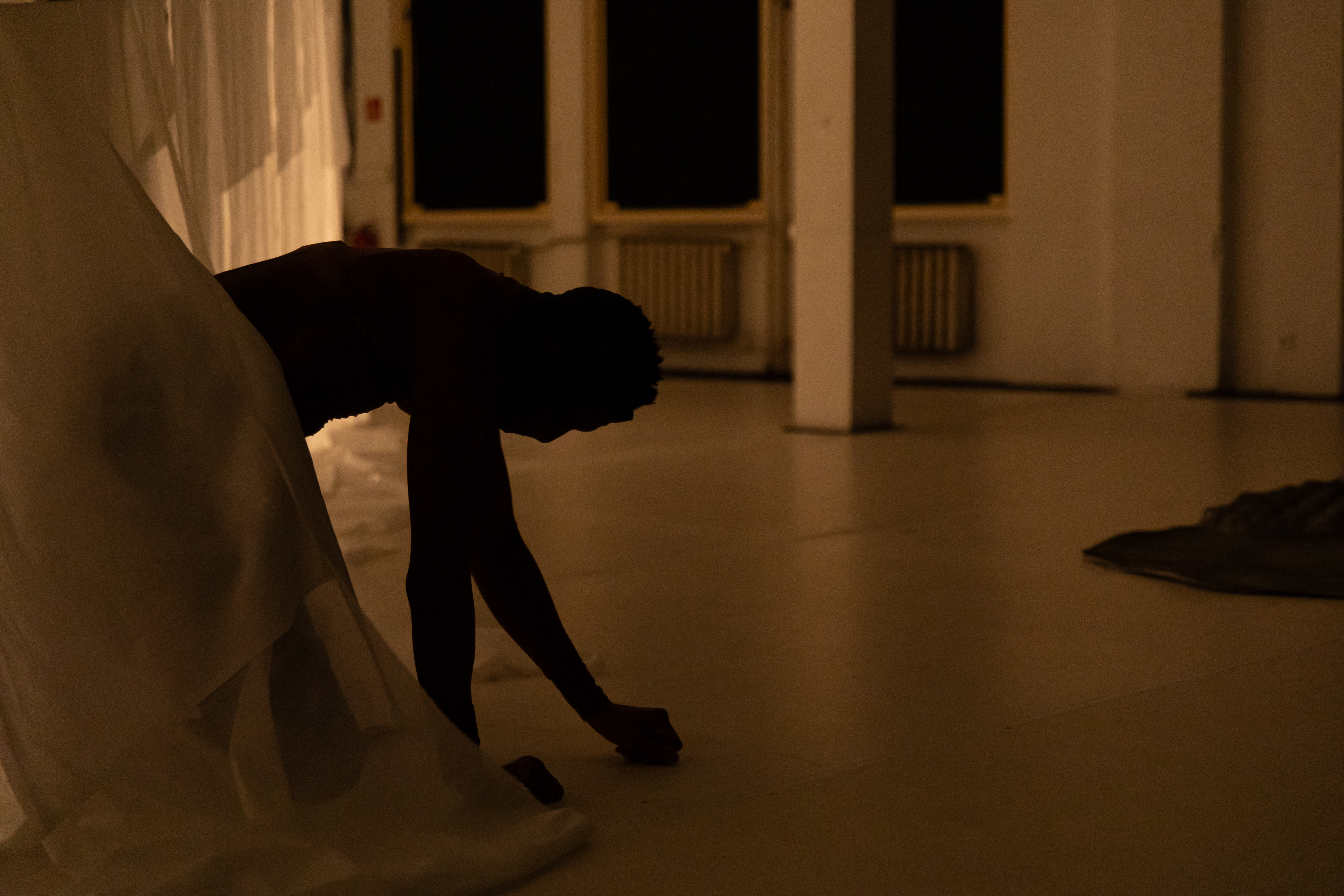
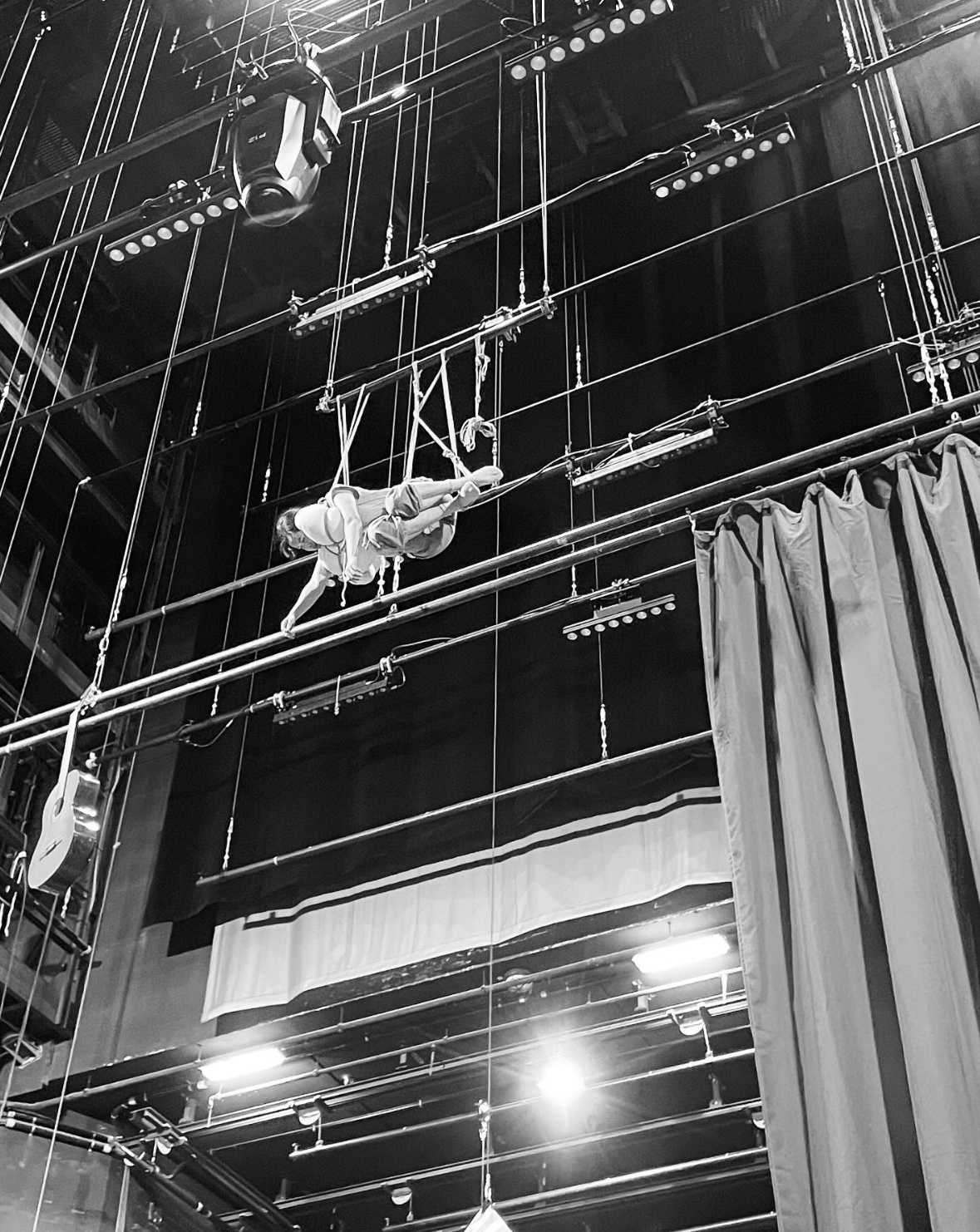
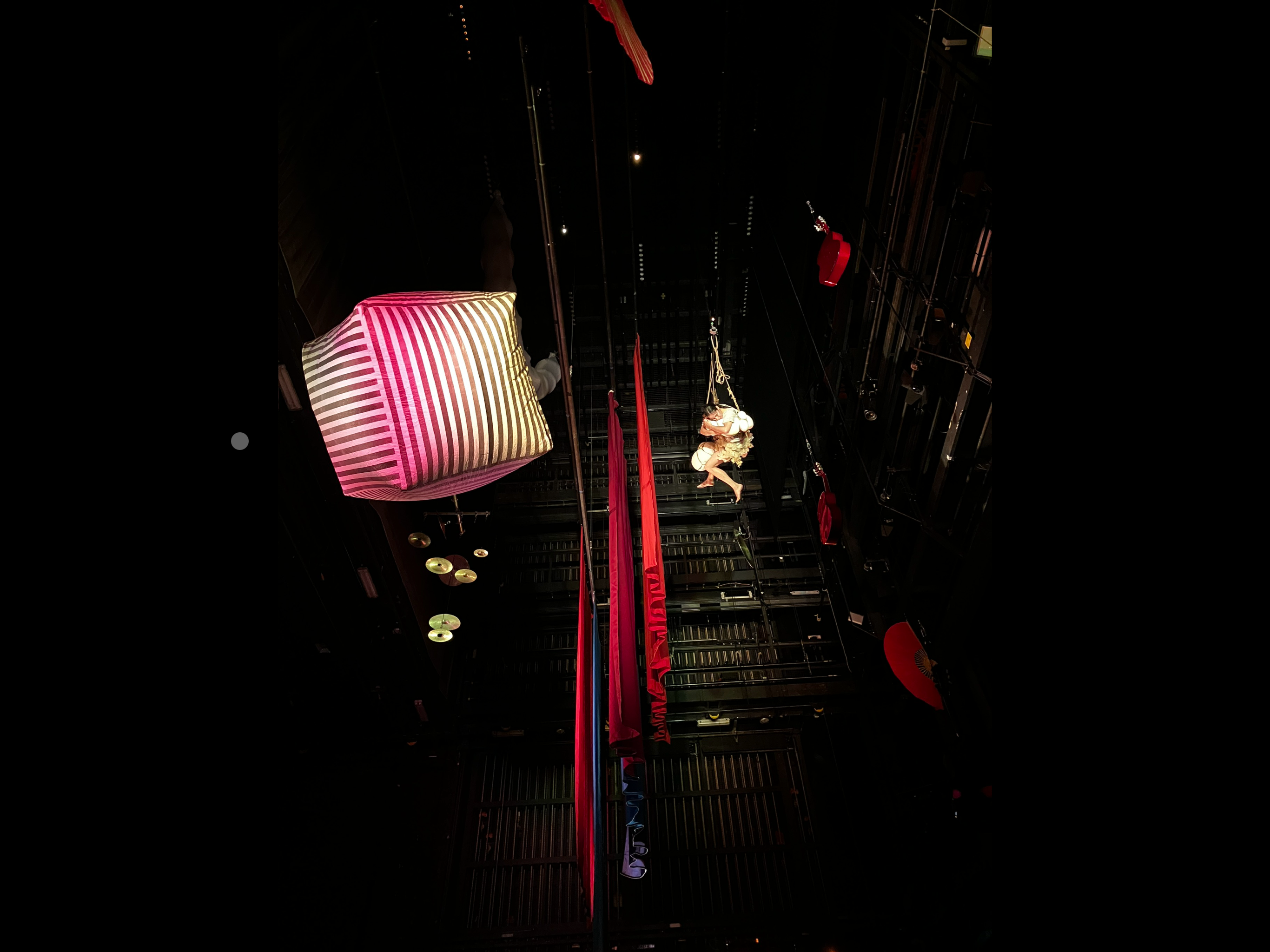
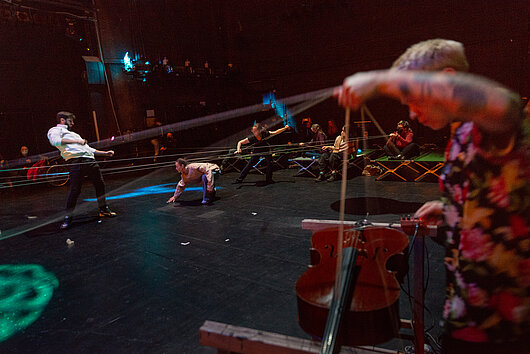
A special view to see the audience 10 meters beneath me. Lying on camp beds looking up to the sky loft. A bondage-inspired vertical theatre by Showcase Beat Le Mot.

Dates: Thu + Fri 19. + 20.December 2024. And Sat + Sun 4. + 5. Januar 2025.
Trailer, German text and tickets here .

“Breathe in, breathe out. Find a niche in the brutal world until the storm has passed. Breathe in, breathe out. Dealing with the authorities, healthcare forms. Noise & light are no longer a simple joke, but nasty everyday hurdles. Breathe in, breathe out. What happens when the limits of consideration meet the limits of perception? Breathe in, breathe out.”

“Raven” is a symposium, gathering and performance about peak performance and the question of what happens when nothing else works. The frame of reference is the chronic illness ME/CFS, as a chronicised form of Long Covid. Sick and non-ill artists are involved in the conception and design of the event series with various contributions. The title refers on the one hand to the dance and party culture of the 90s, and on the other to the claustrophobic fantasies of forced standstill as sketched by E.A. Poe in his famous poem of the same name.

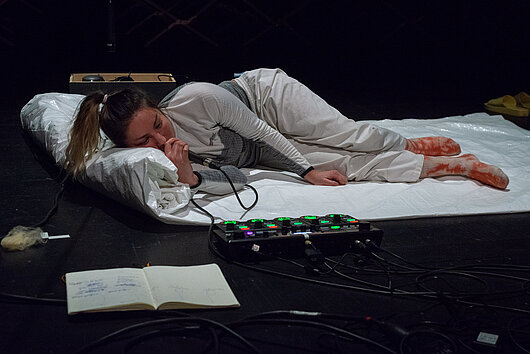
Over four days, “Raven” creates space for the art that is created with and despite ME/CFS. ‘Raven’ is explicitly designed for sick people, companions and allies, as a theatre in a reclining position, with quiet spaces and landscapes with reduced stimuli.

Cast

Concept, realisation: Showcase Beat Le Mot / Artistic collaboration: Florian Feigl, Christopher-Felix Hahn, Albrecht Kunze / Performance by and with: Philip Albus & Ana Berkenhoff, Catherina Cramer, Katharina Cromme, Gosia Gajdemska, The Millennial Midlife Crisis, Malin Harff, Stephan Hellweg, Clara Heinrich, Anja Ibsch, Sunniva Innstrand, Ania Kolyszko, Josephine Lange, Sophie Lenglachner, Roxane Llanque, Romy Lutze, Sebastian Meissner, Dana Müller, Rebekka Muth, Leonard Nadolny, Carolin Ott, Crash Theater, Johanna Pigors, National Ballet of Kosovo, Julia Sandforth, Louisa Schiedek, Lilia Schliephacke, Showcase Beat Le Mot, Elisabetta Solin, Dasniya Sommer, Birte Viermann, Mirjam Wählen, Sebastian Warne, Lisa Wiedemann, Erik Zürn, 4 Faule Frauen, Dania Alasti, Toni Kritzer, Moritz Andreas Bürge, Amar Halilović, Lukas Kahn Kesler, Black Ferk Studio (Matthias Mollner, Judith Schößbock) /Technical direction: Bart Huybrechts / Production management: Olaf Nachtwey
Photo: Michael Shenbrot/ Sandra Fink.

Production: Showcase Beat Le Mot. Co-production: HAU Hebbel am Ufer. Funded by: Berlin Senate Department for Culture and Social Cohesion, Hauptstadtkulturfonds.
Shibari Workshops November + Dezember


Four more Shibari
workshops until the end of year:

12.11.2024 from 19 – 21.30h at Haus Sommer
19.11.2024 from 19 – 21h –  Karada House
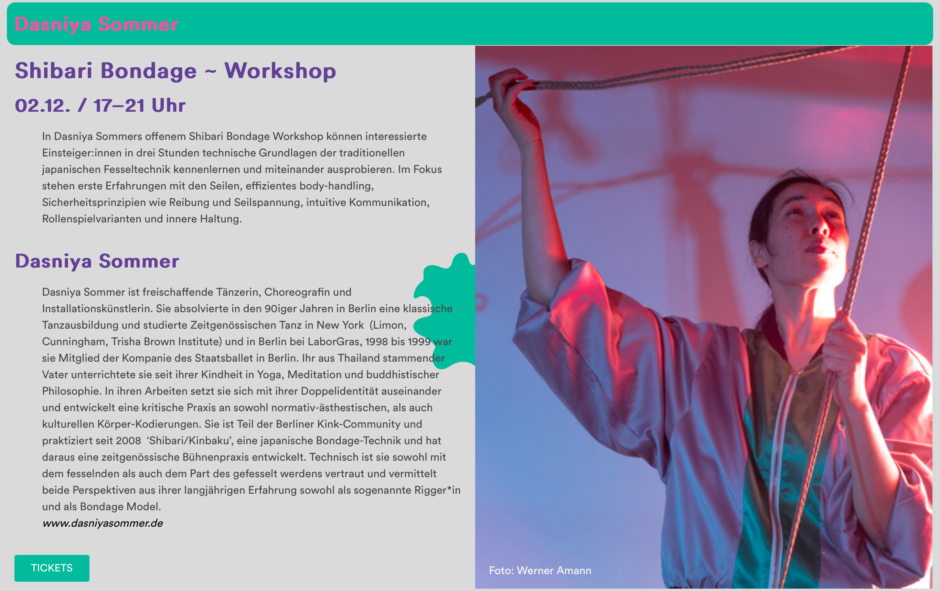
2.12. 2024 at 17h – Zimmt Festival, Leipzig
3.12.2024 from 19 – 21.30h – Haus Sommer

Topic: Durational Harnesses

We will look at classical full body ties for simple suspension. The Hishi-structure is a gradually tightening shape which is fun to build and useful to understand specific decorative elements. Adapting to all bodies, it can be untied with a dynamic vibe, a somewhat wild and gutty energy. Before tying it yourself we will repeat body manipulation principles on the floor.
From the models perpective the tying proccess
needs some patience, but invites also to deep relaxation and dreamy states of rope drunkenness.
Level: begginner with previous experience – light intermediate.

Hours: 19 – 21.30h
Price: 30€ p.p.

For the dates: Nov 12 + Dec 3 at Haus Sommer, you can register via mail: workshops(at)dasniyasommer(dot)de. More info about content/level and Haus Sommer location here.
For November 19th pls reserve your spot via the Karada House site. Last minute participants can pay by the door.

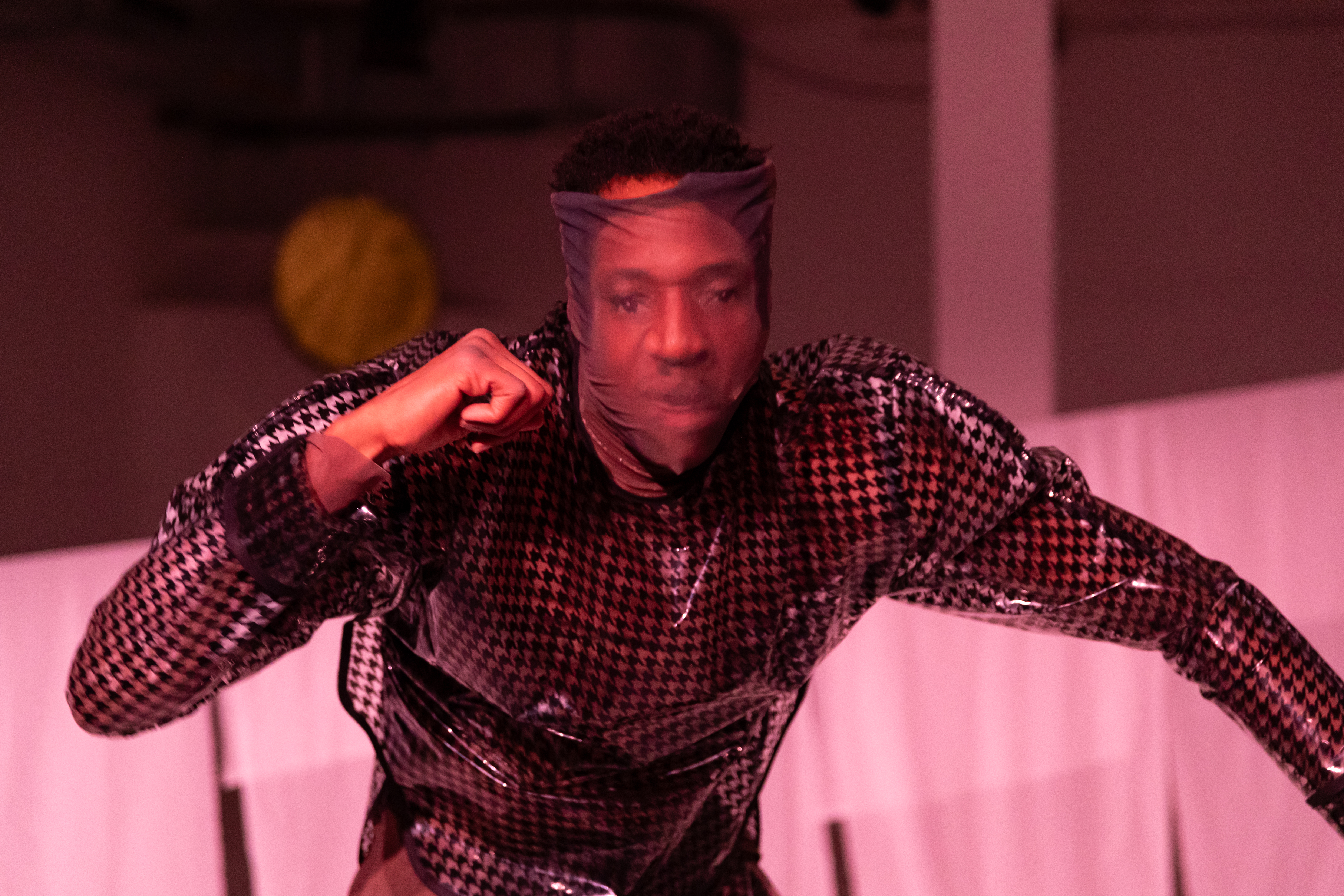
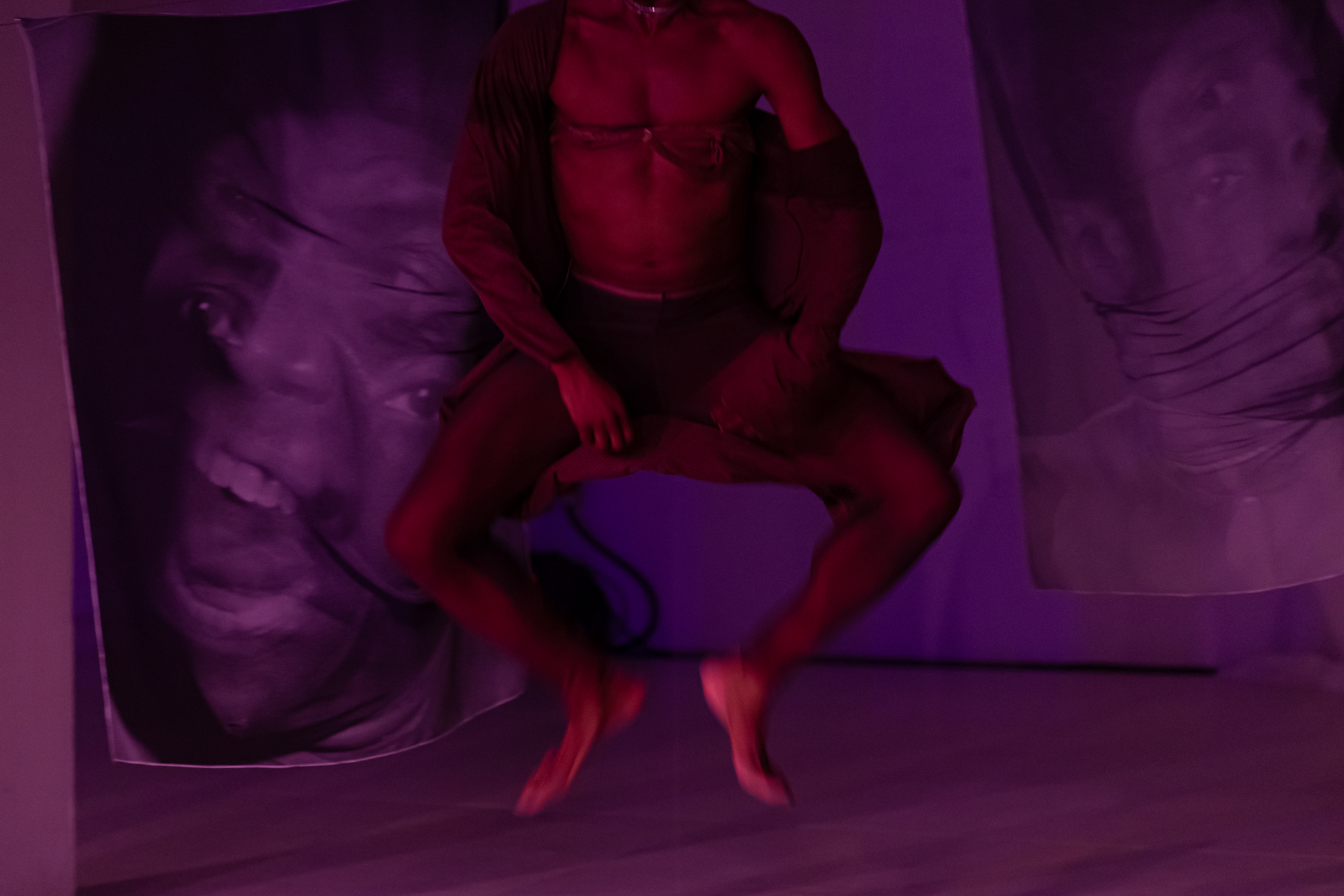
In the picture: Liz Rosenfeld (aka Riv) in their performance ‘ Thank you for your effort even if these requests cannot be fullfilled’.

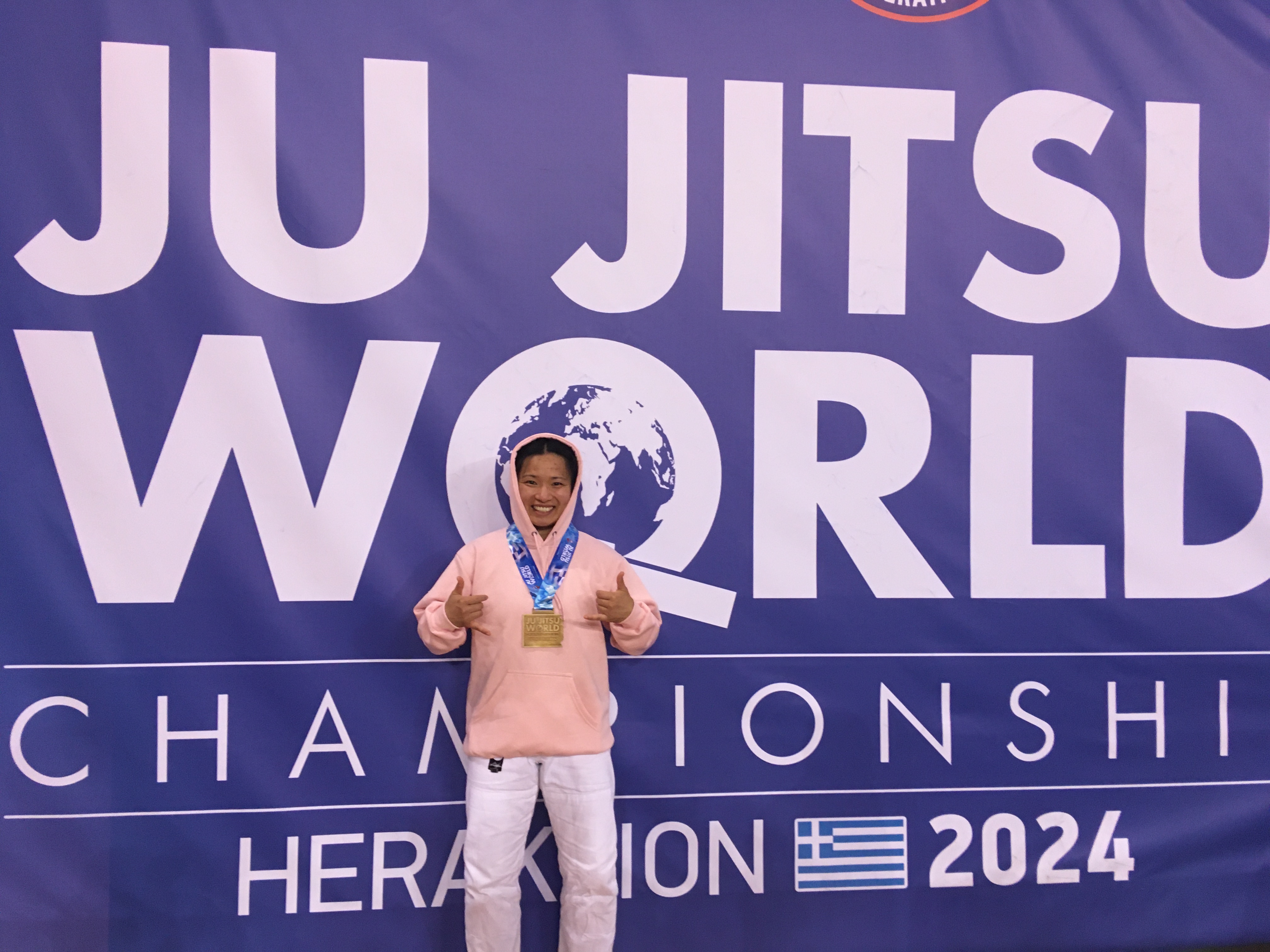
Tanzpraxis Research I : Para Ju Jitsu WM in Crete


Heraklion

An inspiration journey with Fungi Fung. A while ago Fungi said she is eligible for the BJJ (Brasilien Ju Jitsu) Para World Championship in Crete this year. Do it! I said, but the registration turned out too pricey. Take these dollars from the Tanzpraxis scholarship, we continue our choreographic research SPK (der Sommer-Phuong-Komplex, see below), and you bring gold home! ^^
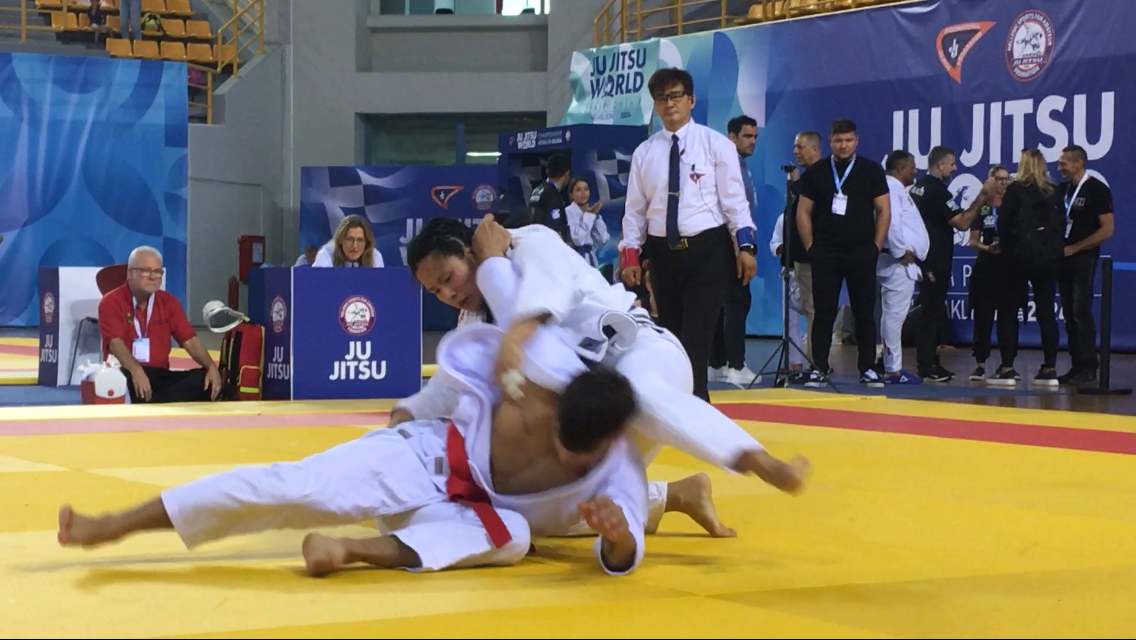
Happy experiencing a new world of performing sports! An extremely beautiful competition hall with more than fifty nations competing. There were six fighting areas, many female referees and most interesting set up that during fights, coaches are allowed to sit behind a counter feedbacking and screaming advices, as from the outside they often have a better view on how to undo the complex Ju Jitsu drills. If you want, these locks look like a forceful killing embracement.
All para fights took place on the last day. Fungis opponent was a male fighter on the autism spectrum. It was important to know, as the para categories are put together by the official board and coaches, so that restrictions are relatively equal, and both fighters have a realistic chance to win. There was valuable briefing from Yakup Mutlu, a fighter himself, and Fungis dear friend and adviser to prepare her strategy. She hardly warmed up I wondered. It was all about mind setting, and became a beautiful fight. Two rounds. They both were so utterly present, like big cats spiraling. At the start one of the Brasi fans loudly macho laughed, seemingly shouting ‘you get her down in a second’, but Fungi submitted his companion in two rounds of three. The whole Brasilian team, and biggest BJJ para-organizer worldwide, were deeply fascinated by her dance-like style. Later in the day I documented the award ceremony, a.o. the Brasilien First Lady handing over gold medals, and one for Fungi! ^^
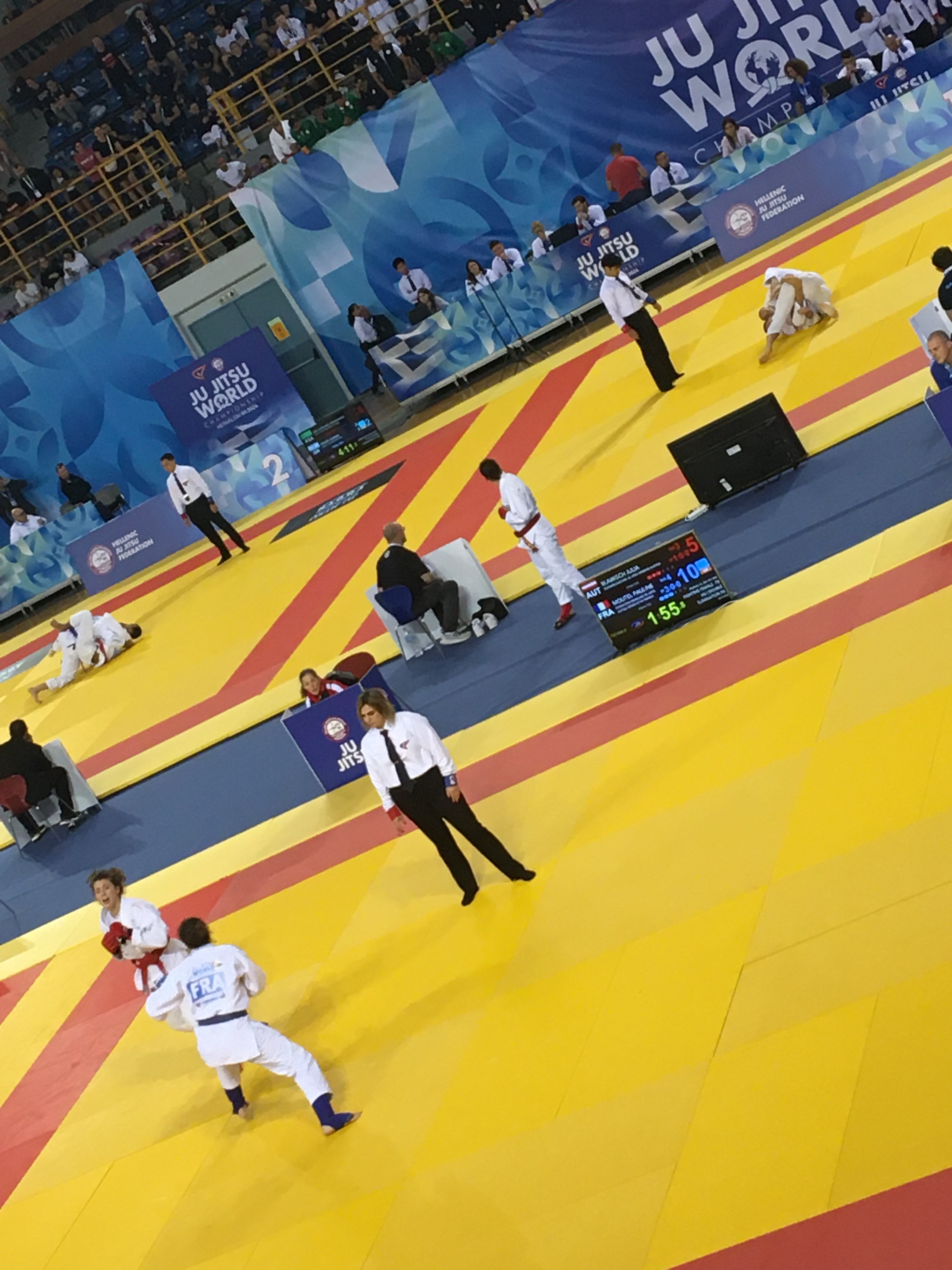
All in all I took more than 2000 photos, some videos and soul supported when possible. It definitely was a sweat producing challange, in such a testo-loaded sport event. We both admired the Mongolian and Kasachstan athletes like teenies.
The more I enjoyed running around as accredited  photographer, being allowed to the edge of the tatamis, and highly aware of fighters crossing the outlines to quickly jump away.
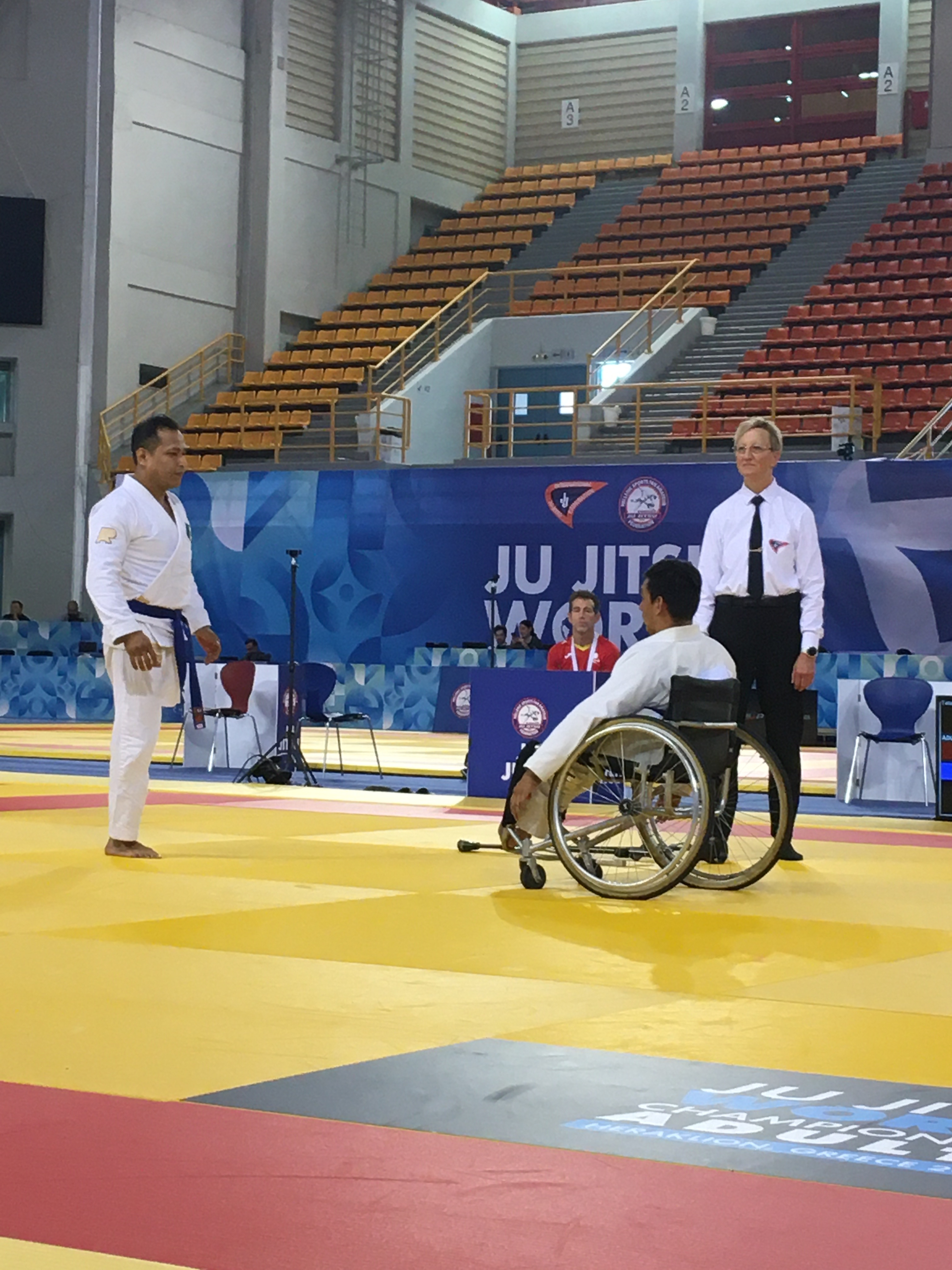
The camera was my magnifying glas. Observing the rough take downs closely, feeling into, anticipating attacks and dramatic facial expressions after submission. Especially I liked the protocol before and after the fight. Bowing and respectfully shaking hands, that’s what I learned to little in ballet training – the sporty team spirit!  One of the club board leaders told me, to shoot the as much as possible emotional snap shots for the German team, they appreciate it a lot.
For the choreographic research I am still pondering how to structurally access this form further. There is a lot of floor work, and so called ‚Duo’s’. Set sequences judged by realistic self-defense elements. One scenario for example was a person in a wheel chair taking down someone standing.
Anyway I am looking forward to take a few classes, and wonder if there is a queer, BiPoc fightclub in Berlin, to hopefully duet further with what Fungi and I started at Ada-Studio this year.

With many thanks to Senatskanzlei für Kultur und Medien Berlin / Tanzpraxis for the support of my choreographing research, and to the DJJB (Deutscher Ji Jutsu Bund).

As long as you want

Coaching ropes and choreographic kink for Sheena McGrandles new work
‘As long as you want’.

Opening: Wed 6.11.2024 at 20.30pm / Hau2
+ 7 + 8 + 9.11. at 20.30pm

The duet “as long as you want” by Sheena McGrandles and Eli Cohen is a choreographic study of lesbian temporalities. The work is inspired by a body of erotic fantasy literature – assembling a cross-temporal arch of female poetic voices. Ancient poet Sappho meets contemporary thinkers such as Anne Carson and Sara Torres, alongside kink and punk practices, including Shibari, gay shadow dance, and pogo. A personal exploration of desire unfolds in a pastel-coloured landscape, with patches of digital renderings and densely knotted denim structures developed together with the visual artist Anna Mirkin.

Through intense physical connections and ambivalent sensations an ongoing choreography of fractured spaces of dis/attachment emerge. Together the performers’ solo bodies meet and melt in a world of never ending waves, rough play, and figures caught in a horizon of want and longing. In this temporary cycle of swellings and throbbings, desire transcends its fleeting nature, revealing transformative, perverse, and polymorphous forces. Playful and engaging, “as long as you want” is a profound choreographic encounter with an impulse of moving toward someone who isn’t yet close enough.

Cast:
Concept, choreography and performance: Sheena McGrandles / Performance by and with: Eli Cohen / Music composition: Stellan Veloce / Dramaturgy and Co-concept: Mila Pavićević / Set design: Anna Mirkin / Costume design: Evan Loxton, Nina Loxton /Light design: Elliott Cennetoglu / Choreographic Outside Eyes: Martin Hansen, Claire Vivienne Sobbotke / Shibari Practice with: Dasniya Sommer / Production: Anna von Glasenapp / high expectations / Production Assistant: Katharina Joy Book / Social Media: Dalia Hassan / Distribution: Paz Ponce / Thanks to: Nattan Dobbkin

War Games – Münchener Kammerspiele


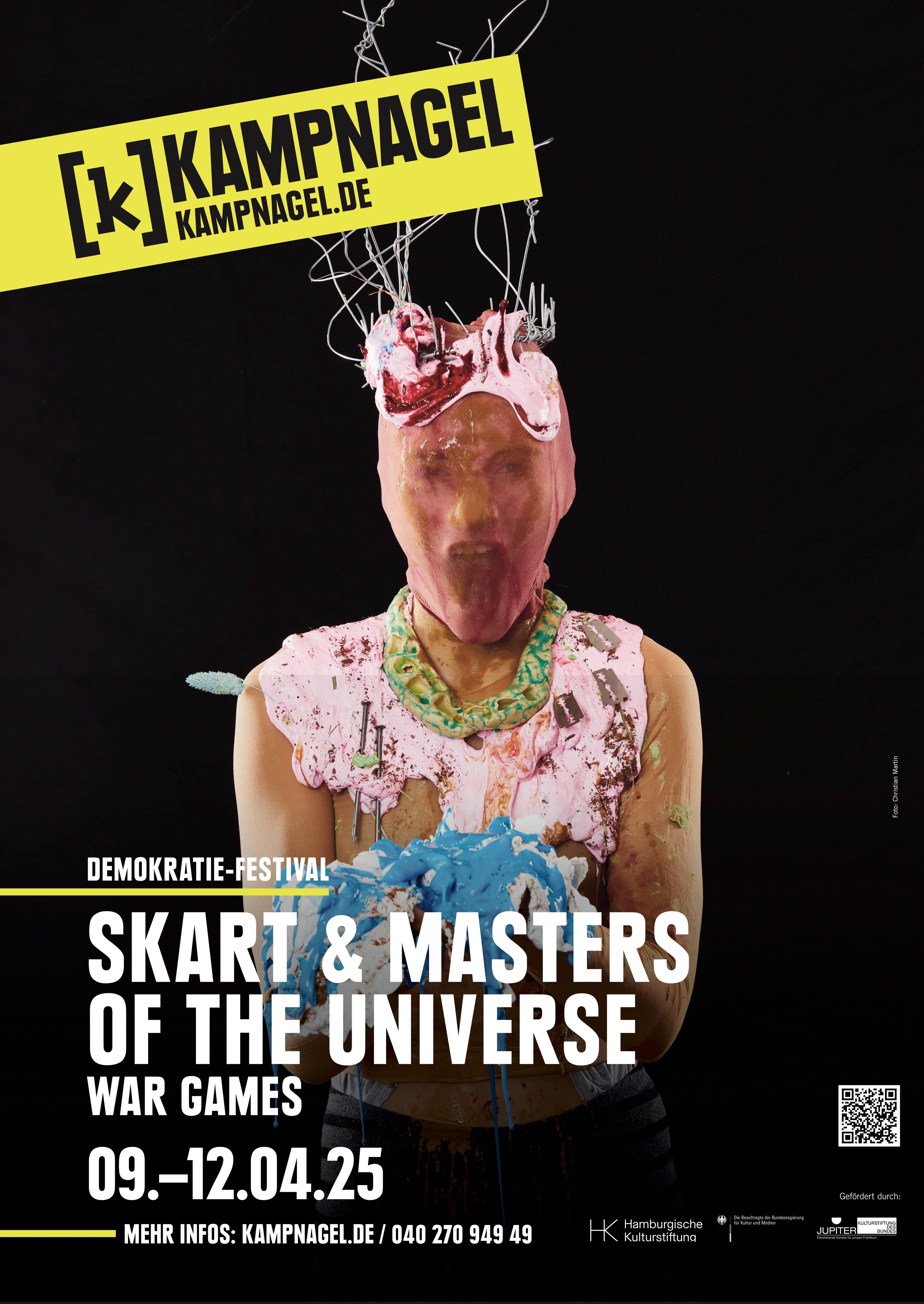
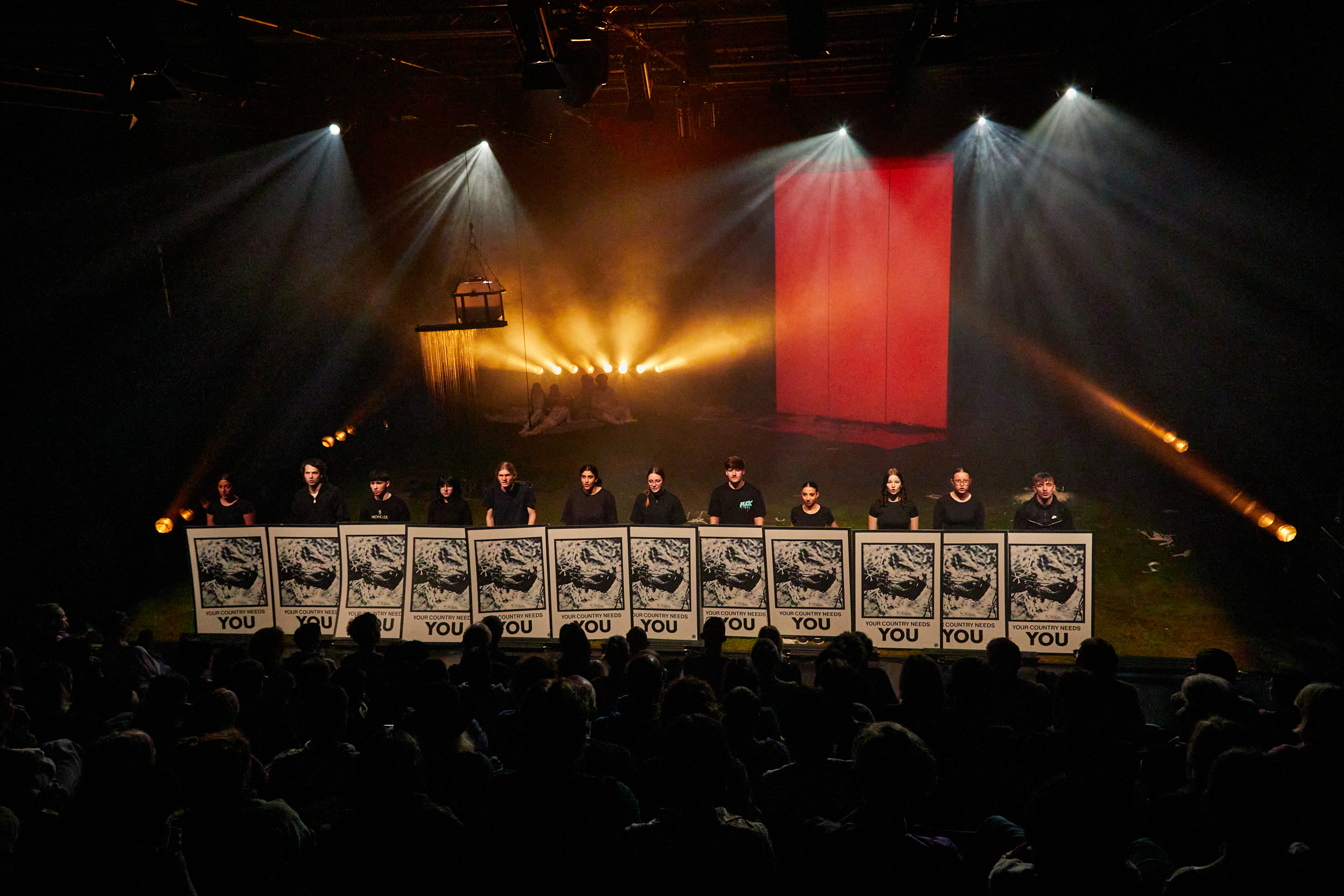
Sehr besonders 16 junge Performer*innen für ‚War Games‘ von Skart zu choreografieren. Wir haben viel diskutiert wie Jugendliche mit Seilen arbeiten können. Wo Sinnlichkeit anfängt, was das Handwerkliche an Seilen für junge Menschen wertvoll macht oder wie kollektives Knoten einen klaren Gruppenfokus schaffen kann. Schön zu sehen, wie behutsam und caring die Teen-Performer*innen miteinander umgehen. Der Vibe, der untereinander entsteht, wenn zB. 10 von ihnen einen verbinden, durch den Raum tragen oder auch welche Gebilde sie aus den Materialien basteln. More to come!

Ein Projekt von SKART & Friends mit Kindern im Alter von 12 bis 14

Theater der neuen Generation Das ist kein Kindertheater und auch keine Erwachsenenunterhaltung, sondern eine Performance für alle. Das Kollektiv SKART und die Kinder reden über „Erwachsenen-Themen“. Dabei sind sie radikal gleichberechtigt.
Sie beschäftigen sich mit aktuellen gesellschaftlichen Diskursen und machen auch vor dem Thema Gewalt nicht Halt. Was ist Gewalt? Was macht sie mit den Menschen? Und was haben die Kinder aus München dazu zu fragen und zu sagen?
Ein gleichermaßen künstlerisches, pädagogisches und soziales Vorhaben und auch ein Beitrag zur gesellschaftlichen Debatte über den Umgang von Erwachsenen mit Kindern.

SKART ist im Bereich Kinder- und Jugendarbeit eine der innovativsten Gruppen der deutschen Theaterlandschaft. Ihre Theater-Performances sind inspiriert durch Bildende Kunst, Body-, Sound- und Video-Art und Zeitgenössischen Tanz. SKART

Stücke sind augenzwinkernd humorvoll und spielen empowernd mit Tabuthemen, die Erwachsene Kindern gerne mal vorenthalten.

SKART & Friends Mark Schröppel (Performer & Theatermacher), Stephan Janitzky (Künstler), Charlotte Heidenreich (Performerin), Dasniya Sommer (Tänzerin & Choreografin), Janne Plutat (Kostümbildnerin), Anton Kaun (Video- & Noisekünstler), Lea Letzel (Künstlerin & Pyrotechnikerin), Deniz Khan (Musiker)

Premiere : 26. Juni 2025
Therese-Giehse-Halle / Kammerspiele

Tying and Timing

shibari-bondage-berlin-dasniya-sommer-tara-samaya-photo-pippa-samaya


Shibari classes at Karada House: 24.9. + 22.10.2024
Shibari classes at Haus Sommer 1. + 8.+ potentially 15. 10.‘24

Topic: Tying and Timing
Hours: 19-21h
Group size: max. 10 couples

Repeating Japanese inspired technique: futo momo, gote and potentially semi-suspension, we will look at different temporalities while tying. Considering the preparation time before a bondage ritual. Connecting individual rhythms of rope from slow binding to mid tempo or speed tying, and also talking about ‘crip time‘ – constellations. How can experimenting with tempi, rhythm and rope translate intimate desires into a groovy session? Or, how can we embrace our anti-groove?

More info and directions: Karada House
Address: KARA, Perleberger Straße 59, 10559 Berlin (Moabit)

More information and the Haus Sommer address here.

In ropes: Tara Samaya
Picture: Pippa Samaya

LATE

Soon travelling to Finland for Juli Reinartz research/doctoral thesis. We will spend two weeks at the Saari-Residence in rural nature. A journey by land with a multi-divers team and my little one joining as well. Last week we shortly touched on the topic in her studio in Berlin where the final presentation takes place at the end of June.
I much enjoy the reflective-somatic space Juli creates on ‘Temporality and Bodies’:

LATE is a long ball.
A baroque opulence with contemporary bodies.
A collective dance on crip time.
An excess of the time that we have.
An experiment on collectivity.
How can we share time if we cannot share time?

A group of performers returns to the beginnings of dance notation, gets in formation and assesses anew the cultural past that has defined the power space around them. They put in question the possibility of synchronicity and organize the space along their temporal scope. By way of that, they create a space of simultaneities. They engage with the past in order to create a future for themselves.

Research direction and choreography: Juli Reinartz
In collaboration with the performers Addas Ahmad, Ariane, Hassan Pour-Razavi, Dasniya Sommer and Matilda Carlid
Research participation: Daria Dönch, Jojo Büttler, Massiamy Diaby
Audio description: Silja Korn in collaboration with the performers
Outside eye: Gerko Egert
Music: Iftah Gabbai
Production assistance: Merle Wurl
Technical direction: Fabian Bleisch

Funded by Kulturamt Pankow and Theater Academy, Uniarts Helsinki. With generous support of Saari Residence, funded by Kone Foundation. Supported by residency program at PACT Zollverein (Essen), funded by the Ministry for Culture and Science of the State of North Rhine-Westfalia. Research funded by the performing arts Fund with funds from the Federal Government Commisioner for Culture and the Media as part of NEUSTART KULTUR. With generous support of Theater Thikwa.

22 and 23 June 2024
Entrance between 7 and 9pm
Storkower Strasse 115
10407 Berlin

For tickets, further information on the performance and accessibility: www.late-night.net

Contact: latebirdnight@gmail.com
German invitation here

Photo: Iftah Gabbai
Review: The Centre is Everywhere – The Circumference is Nowhere by Alice Heyward

ADA PERFORMANCE: SPK – der Sommer Phuong Komplex


Trailer by Tanzforum Berlin / Bickman & Kolde GbR.

Text zu neworks – Aesthetics of Access #: „SPK – der Sommer Phuong Komplex“
(15./16. März 2024) von Gast-Studioschreiberin Camilla Pölzer

Eintauchen in die Welt von Fungi Fung 

„SPK – der Sommer Phuong Komplex“ ist das erste Stück der neuen Reihe „neworks – Aesthetics of Access“ im ada Studio, kuratiert von Liisi Hint und Maria Ladopoulos. In der Performance beschäftigen sich Dasniya Sommer und Fungi Fung mit der gelebten Realität von Bipolarität und benutzen als Access Tool Leichte Sprache.

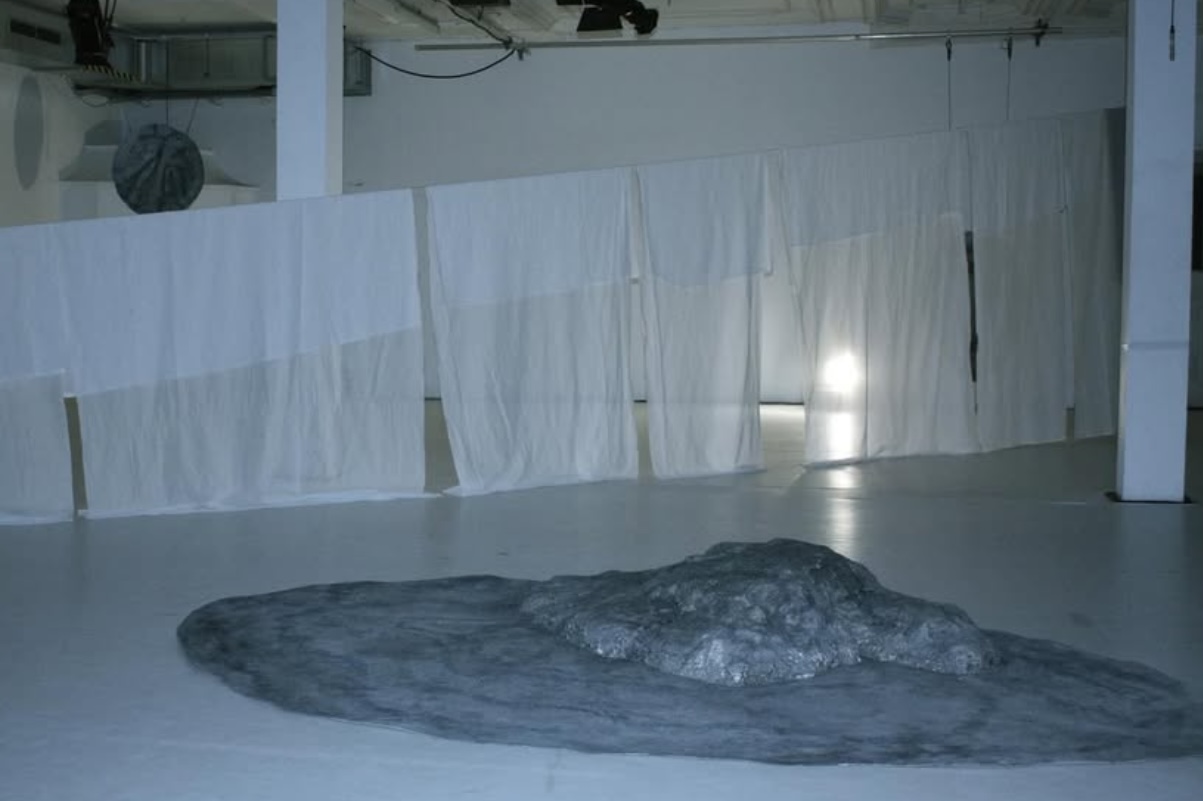
Am Einlass wird mir und den anderen Zuschauer*innen ein heißer Stein angeboten. Ich nehme ihn gerne an. Auf der leeren Bühne sitzen zwei Performerinnen. Sie sind mit vielen dünnen Seilen zusammengeknotet. Die Köpfe sind eingesperrt mit einer aus Duplosteinen (große Legosteine) gebauten Festung. Langsam beginnen die Körper sich zu bewegen; die Finger lösen die vielen Knoten. Die Seile waren sehr eng um die Körper geschnürt; als sie gelöst sind, ist ein Atem zu hören: Wie gut, denke ich.
Die beiden gesichtslosen und befreiten Körper beginnen den Raum zu erkunden.
Fungi, eine der Performerinnen, umarmt Dasniya von hinten. Es ist ein gewaltvolles Umarmen. Dabei zerbrechen die Festungen, man sieht die Gesichter, die Duplosteine verteilen sich im Bühnenraum und sind nur noch Spielsteine. Der umarmende Körper lässt los, kommt erneut und die letzten „Festungsmauern“ zerbrechen. Die dritte Umarmung ist sanfter.
Es folgen Kampfsportübungen. Die beiden Performerinnen kämpfen miteinander und gegeneinander. Die Arme greifen ineinander, halten sich und lassen sich wieder gehen. Es ist eine hohe Anspannung in den Körpern. Die Qualität der Bewegungen und des Miteinanders wechselt schnell von Vertrauen zum Kampf. Immer wieder hört man die Duplosteine über den Boden gleiten, wenn die Körper diese durch den Raum schieben. Fungi stoppt und beginnt ein Gedicht aufzusagen. „Auf niederländisch?“ frage ich mich. Sie bricht ab, zieht einen Zettel aus Dasniyas Hosentasche und liest den Text vor. Es ist ein selbstgeschriebenes Gedicht, dass mich sehr berührt und ich habe den Eindruck, sie ebenfalls. Es geht um betäubte Gedanken durch Medikamente, um Kindheit, Jugend und Steine und ich habe direkt die Referenz zu dem warmen Stein in meiner Hand.
Ich fühle mich geehrt, es hören zu dürfen und einen Einblick in ihre Gedanken und Gefühlswelt zu bekommen.
Es folgt eine Szene, in der Dasniya von Fungi wie eine Balletttänzerin hochgehoben wird und auch wenn ihr das sichtlich nicht guttut, lächelt sie bei jedem Sprung. Mein Gefühl sagt mir, dass sie über ihre (körperlichen) Grenzen geht. Es wirkt absurd und ich und einige andere Zuschauer*innen müssen schmunzeln.
Die Bühne wird dunkel und über die Lautsprecher ertönt ein aufgenommenes Interview zwischen Dasniya und Fungi. Fungi spricht über die depressiven und manischen Phasen ihrer Bipolarität. Ich fühle mich durch die Art, wie sie über die Krankheit spricht, sehr mit ihr verbunden.
Das Gesprochene wird in leichte Sprache übersetzt und auf die Wand projiziert. Die Sätze in leichter Sprache haben einen anderen Rhythmus als die gesprochenen Worte. Für mich spannend, dass das gesprochene Wort viel schneller läuft als die leichter Sprache. Ich kann das Gehörte zeitversetzt nochmal lesen und tiefer einsteigen.
Währenddessen bindet sich Fungi einen runden Sitzsack auf den Rücken wie einen Schildkrötenpanzer. Sofort verknüpft mein Gehirn das Bild mit Depressionen. Betroffene Menschen beschreiben die Depression oft als einen schweren Sack, der auf den Körper drückt und einen nicht aufstehen lässt. Ich habe jedoch das Gefühl, dass Fungi einen Weg gefunden hat, mit dem Panzer zu leben – Sie tanzt mit ihm auf dem Rücken. Das letzte Bild: Fungi und Dasniya knoten sich wieder zusammen, verbinden sich.

Für mich erzählte die Performance das innerliche und äußerliche Ringen mit der Bipolarität von Fungi und ihren Umgang damit. Mein Eindruck war, dass sie in dem Stück selbst entschieden hat, wie viel sie mit uns teilen möchte.